 How-to
How to Maintain a Standby Generator: Monthly to Annual Checklist
Quick Summary
Learn how to maintain a standby generator by running monthly exercise checks, changing oil and filters every 100 to 200 run hours or yearly, and scheduling annual professional service. These steps keep the unit ready to start during an outage.
- Run the generator for 15 to 20 minutes each month under a partial load.
- Change oil and filter every 100 to 200 run hours or once a year, whichever comes first.
- Exercise runs do not reset the oil-change clock, so log run hours at every exercise.
- Check the battery and charger monthly, since a weak battery is a common cause of failed starts.
- Keep the enclosure and ventilation clear of debris, leaves and snow at all times.
Table of Contents
- Why Standby Generator Maintenance Matters
- Standby Generator Maintenance Checklist by Frequency and Operating Hours
- Monthly Checks: Exercise Runs, Visual Inspection, and Battery
- Changing Oil, Filters, and Spark Plugs on Schedule
- Generac Maintenance Cost and Maintenance Kit Options
- Using the Generac Generator Maintenance Manual and Safety Limits
- Schedule Your Next Generator Service With Hriczak Electrical
- Frequently Asked Questions
Why Standby Generator Maintenance Matters
Last Updated: November 22, 2026
A standby generator sits quiet for most of its life, then has to start on the worst night of the year. Knowing how to maintain a standby generator through routine upkeep is what makes that start reliable. The advice below reflects what the manufacturer and published maintenance guides recommend.
A standby generator is a permanent backup power unit that starts automatically when utility power fails. Most units are wired through an automatic transfer switch, so they need to be ready at all times.
Maintenance guides agree on the basics. A 2026 homeowner guide from Empire Home Protect's standby generator maintenance guide recommends changing the oil and filter every 100 to 200 run hours or once a year, whichever comes first. Regular checks catch small problems before they become no-start calls during an outage.
Monthly running matters too. A 2026 maintenance article from BeInJ's generator maintenance tips recommends running the generator for 15 to 20 minutes each month under a partial load. That circulates the oil, keeps the battery charged, and confirms the unit still starts and runs.
- Fresh oil protects the engine between uses
- Monthly exercise runs catch starting problems early
- Clean connections and a charged battery keep the unit ready
- A written service log helps you spot trends over time
Standby Generator Maintenance Checklist by Frequency and Operating Hours
Service timing depends on two clocks running at once: calendar time and engine run hours. See service intervals matched to run hours and usage Whichever threshold arrives first triggers the task. A unit that exercises 20 minutes a month accumulates only about four run hours a year, so the annual calendar interval usually wins for oil changes on lightly loaded home standby units. A unit that carried the house through a multi-day outage can pile up 100 hours in a week and hit the run-hour threshold long before the calendar one.
A practical maintenance calendar looks like this:
| Interval | Tasks |
|---|---|
| Weekly | Walk-by visual check: enclosure clear, no standing water, no obvious leaks or damage |
| Monthly | Exercise run under load, visual inspection of enclosure and ventilation, battery and charger check, oil level check, coolant level check on liquid-cooled units, log run hours |
| Every 100 to 200 run hours or annually (whichever first) | Engine oil and oil filter change, air filter inspection, spark plug inspection, fuel system visual check, battery load test |
| Every 200 to 400 run hours or every two years | Air filter replacement, spark plug replacement, valve clearance check on air-cooled units per manual |
| Annually | Full service by a qualified technician, transfer switch inspection and exercise, fuel line and regulator inspection, exhaust and carbon-monoxide check, fastener and mount torque check |
| Every five years | Coolant flush on liquid-cooled units, battery replacement, hose and belt replacement per manual |
Three distinctions matter more than the table itself. First, an exercise run is not a service interval, it is a readiness test. It confirms the unit starts, transfers load, and runs without alarms, but it does not reset the oil-change clock. Second, run hours on the controller are the authoritative number; log them at every exercise so the annual service is scheduled against real use, not guesswork. Third, manufacturer schedules vary by model and fuel type, so the table above is a planning framework, not a substitute for the manual.
Standards bodies also set testing expectations for certain installations. A 2026 summary of NFPA 110 from CS Diesel Generators' NFPA 110 summary recommends monthly testing under load for at least 30 minutes at a load of at least 30%. That is a secondary summary, not the standard itself, and NFPA 110 applies primarily to emergency and legally required systems rather than typical residential standby units. What applies to your unit depends on its size, fuel, and installation. Check your manufacturer's manual and any local code requirements for model-specific intervals.
A simple log, date, run hours, task performed, parts used, and any warning codes, turns this calendar into something you can actually audit. A service log can help catch a slow trend, such as rising oil consumption or a battery that no longer holds a charge between exercise runs, before it becomes a no-start call during an outage.
Recommended generator maintenance intervals
Monthly Checks: Exercise Runs, Visual Inspection, and Battery
Start with a quick walk-around. Look at the enclosure, the ventilation openings and the area around the unit. Remove leaves, debris and snow, and make sure nothing is stored close enough to block airflow.
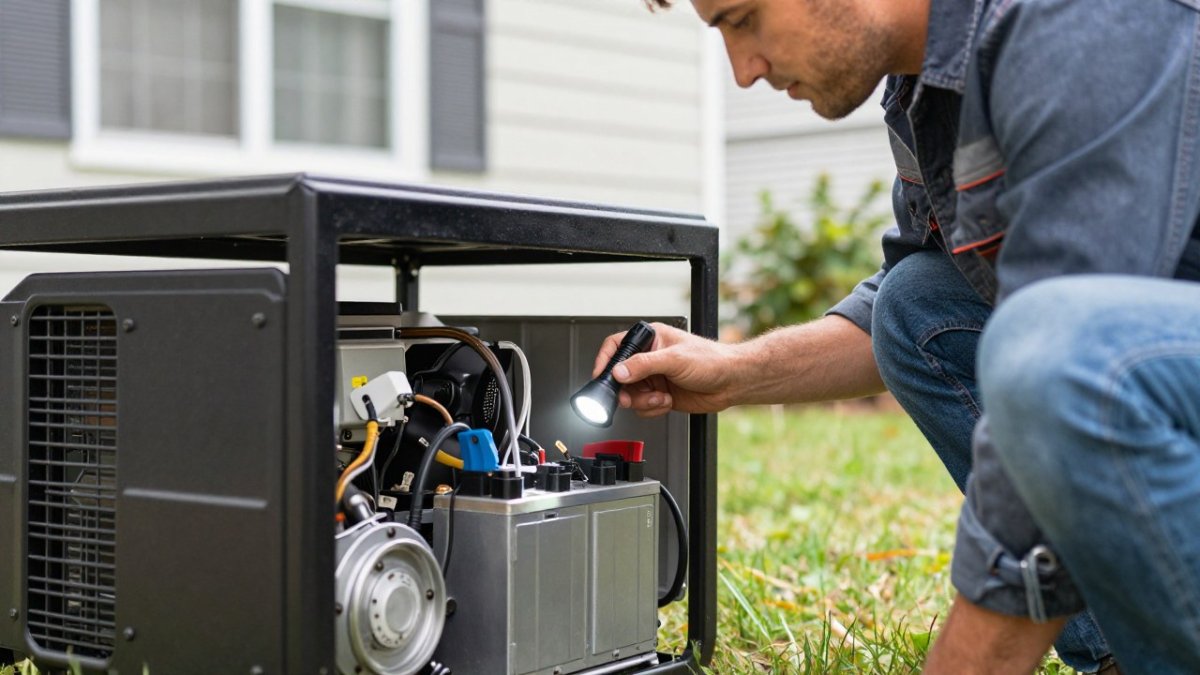
Next, check the battery. Look for loose or corroded terminals and confirm the charger is working. A weak battery is one of the most common reasons a standby unit fails to start.
Then run the generator. Monthly exercise runs circulate the oil and confirm the engine starts under load, which is a core part of how to maintain a standby generator. Watch the control panel for alerts or warning lights, and note anything unusual in your service log.
Watch out: Never service the unit while it is running or while the transfer switch is in a state that could energize the house wiring. Turn off the unit and follow the manual before opening any panel.
Changing Oil, Filters, and Spark Plugs on Schedule
Oil and filter changes are the core of routine service, and the interval is set by run hours first and calendar time second. Many standby units call for an oil and filter change every 100 to 200 run hours or once a year, whichever comes first. Use the oil type and capacity listed in your manufacturer's manual, small air-cooled engines typically specify a specific viscosity and API service category, and using the wrong weight in cold weather is a common cause of hard starting. Replace the oil filter at the same time as the oil, and check the drain plug gasket for weeping before you refill.
Air filters and spark plugs follow a longer cycle. Inspect the air filter at every oil change and replace it yearly, or sooner if the unit sits near a gravel drive, construction dust, or heavy pollen. A clogged air filter richens the mixture, which fouls plugs and raises exhaust temperature. Spark plugs are typically replaced every 200 to 400 run hours or every two years; inspect the electrode gap and color at each annual service, since a black, sooty plug points to a rich condition and a white, blistered plug points to overheating or a lean mixture. On air-cooled units, valve clearance is also a scheduled check, it is not a homeowner task, but it belongs on the same service ticket so it is not forgotten.
Fuel type changes the service picture in ways the engine schedule alone does not capture. Natural gas systems run clean but depend on a properly sized gas line and regulator; a unit that starts hard under load often has a supply-pressure problem rather than an ignition problem. Propane systems need the tank level checked, the regulator vent kept clear of ice and debris, and the liquid-withdrawal setup confirmed, because a tank that is too small or too cold to vaporize fast enough will stall the unit mid-outage. Gasoline systems, common on portable and older standby units, add fuel-stabilizer and tank-freshness tasks, stale fuel is the leading cause of no-start conditions on gasoline units, and the fix is to run the unit under load monthly and treat or drain fuel that will sit for months.
Inspect the fuel lines, hoses, and connections for cracks, leaks, and corrosion at every annual service. Look for yellow or brown staining at fittings, a sulfur smell near a propane regulator, and any soft or brittle hose. Do not use a flame to check for leaks; use a soap solution or a technician's leak detector.
Many homeowners can handle a basic visual check, an oil level check, and a monthly exercise run. Fuel-system work, electrical testing, valve adjustment, and transfer-switch service are best left to a licensed technician.
Generac Maintenance Cost and Maintenance Kit Options
Costs vary with the generator model, your fuel type and how far the service schedule has slipped. Plan your budget for a Generac service visit Pricing depends on the work needed. Contact Hriczak Electrical Contracting LLC through its website for a current quote.
Generac maintenance kits bundle common service parts such as oil, filters and spark plugs. Check the part numbers against your model before ordering. For what the overall installation involves, see Generac's standby generator product information.
Using the Generac Generator Maintenance Manual and Safety Limits
The Generac generator maintenance manual is the final authority for your unit. It lists oil type, capacity, service intervals and safe operating limits. When this guide and the manual disagree, follow the manual.
Pay attention to safety limits. Keep the unit's enclosure clear, never run it in an enclosed space, and keep fuel storage away from the unit. Leave major repairs, fuel-system work and electrical testing to a licensed professional.
Schedule Your Next Generator Service With Hriczak Electrical
A standby generator is only useful if it starts when the power goes out. If your unit is due for service, or if the monthly checks above turned up a problem, contact Hriczak Electrical Contracting LLC. The team has over 18 years of experience and offers 24-hour emergency service.
Frequently Asked Questions
How often should you run your standby generator?
Most manufacturers and maintenance guides recommend running a standby generator under a partial load for about 15 to 20 minutes each month. The exercise cycle circulates engine oil, keeps the battery charged, and confirms the unit still starts and transfers power. Many generators run an automatic weekly self-test, but a monthly exercise run under load is the safer check. Always confirm the interval in your owner's manual, since requirements vary by model and fuel type.
Can I do Generac maintenance myself?
Many homeowners handle the basic tasks: visual inspection, keeping the enclosure clear of leaves and debris, checking oil level, and running the monthly exercise cycle. Oil and filter changes, spark plug work, and fuel system checks can be done by a homeowner who follows the Generac generator maintenance manual closely. Electrical work, transfer switch inspection, and anything involving gas lines should be left to a licensed electrician. Hriczak Electrical Contracting LLC is an authorized Generac installer. Contact the company for current service pricing, since costs depend on the model and scope of work.
What maintenance does a standby generator need each year?
Annual maintenance typically includes an oil and oil filter change, air filter inspection or replacement, spark plug inspection, battery testing and cleaning of terminals, and a check of the fuel supply lines and connections. Technicians also inspect the transfer switch and electrical connections and run a load test. Some guides recommend annual service at least once a year even if operating hours are low, because seals, hoses, and battery condition degrade over time. Follow the interval in your generator's manual.
When should you hire a professional to service a standby generator?
Hire a professional for transfer switch and electrical inspections, gas or propane line work, fuel leaks, unusual smells, repeated warning lights, or a no-start condition after a failed exercise cycle. Professionals also handle annual load testing and any repair that involves wiring. Hriczak Electrical Contracting LLC offers 24-hour emergency service with licensed electricians. For current pricing or a quote, contact the company directly through its website.