 How-to
7 Standby Generator Service Intervals You Need to Know
Last Updated: November 8, 2026
Quick Summary
Schedule standby generator service once a year or at the run-hour interval in your manufacturer's manual, whichever comes first. A common rule is changing oil and filters every 100 to 200 run hours or annually. The calendar matters because an idle generator still ages.
- Run a weekly exercise cycle and watch for missed tests as an early warning sign.
- Do monthly owner checks: oil level, coolant level, leaks, and cleared vents.
- Book a professional annual visit covering oil, filters, plugs, battery, and transfer switch.
- After a long outage, check fluids sooner and consider booking a service visit.
- Any fuel smell means turning the unit off and calling a technician.
Table of Contents
- The Real Answer: Time, Hours, and the Manual
- How Often Should a Generac Generator Be Serviced?
- Your Four-Layer Maintenance Schedule
- What Homeowners Can Do vs. What Needs a Technician
- Generac Maintenance Cost: What to Expect and When a Plan Pays Off
- Finding Your Generac Maintenance Schedule PDF and Schedule A Kit
- Warning Signs Your Generator Needs Service Early
- Schedule Your Standby Generator Service with Hriczak
- Frequently Asked Questions
The Real Answer: Time, Hours, and the Manual
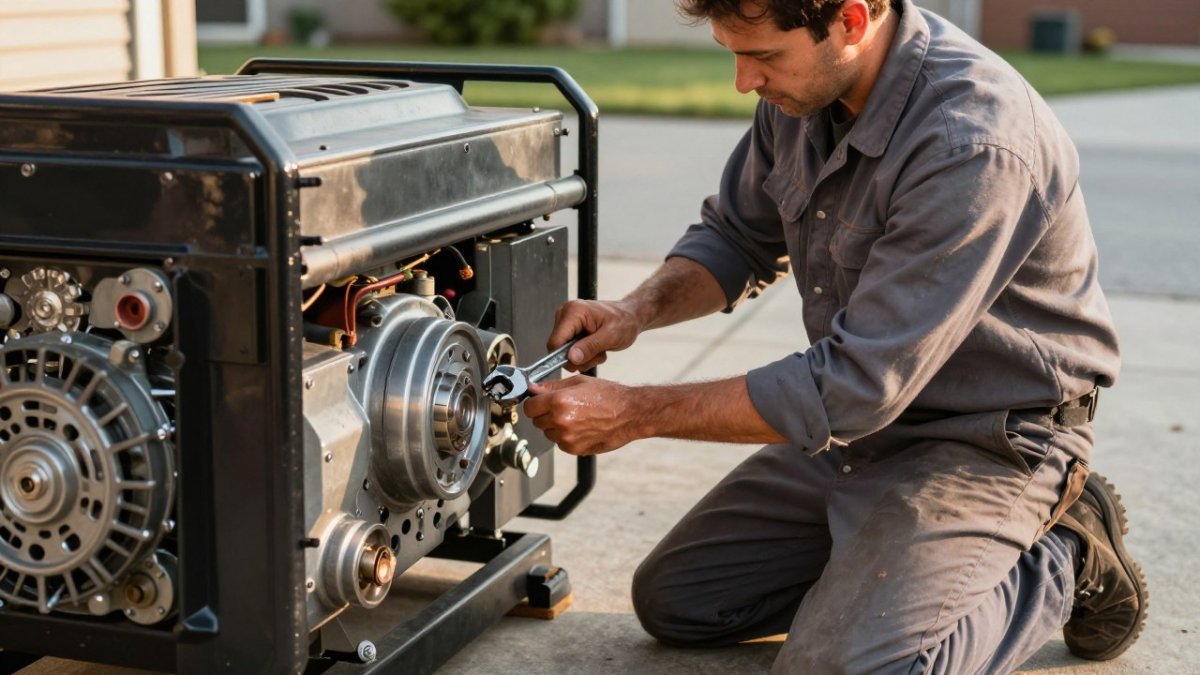
The short answer to how often should a standby generator be serviced is once a year or according to the run-hour interval in the manufacturer's manual, whichever comes first. The calendar matters as much as the hour meter. A generator that sits idle still ages.
Oil collects moisture. Belts dry out. A battery that never works hard can still fail quietly.
That is why an annual service visit is recommended. It can catch problems that hours alone will not show, and it helps keep the unit ready for when it has to run.
Why Manufacturer Guidance Beats Generic Advice
Service intervals are not the same across every brand. One maker may point to an annual check or a set number of hours. Another may stretch the window further. Some published guides even suggest shorter oil-change gaps.
The differences are real, and they matter. Your specific model's owner's manual is the only schedule that fits your unit. Generic advice from a neighbor or a forum thread can be wrong for your machine.
A common mistake is treating one brand's interval as universal. It is not. Follow the book that came with your generator.
Empire Home Protect standby generator maintenance guide puts the general rule simply: change oil and filters every 100 to 200 run hours or once a year, whichever comes first. That is a solid starting point, not a final answer.
How Often Should a Generac Generator Be Serviced?
Generac's published guidance for home standby units is documented in each model's owner's manual. The exact service interval depends on the model family, which is why the manual is the authoritative source.
What the Generac Manual Actually Says
Open your manual to the maintenance schedule page. It lists each task and the interval for your model. For most air-cooled home standby units, the schedule separates three kinds of work:
- Every exercise cycle: the unit starts and runs on its own, typically once a week, to circulate oil and keep the battery charged.
- Annual or hourly service: oil and oil-filter change, air-filter inspection, spark-plug inspection, battery and charger check, and a general visual inspection. The hour trigger varies by model, so check your manual for the figure that applies.
- Longer-interval items: valve clearance checks and other internal adjustments that fall on a multi-year or higher-hour cadence in the manual.
If you cannot find the book, the model and serial number on the unit's label will get you the right document. Generac publishes schedules by model, so matching those numbers matters.
Watch out: treating a liquid-cooled unit's schedule as if it were an air-cooled unit's schedule is an error to avoid, because the two families can have different service requirements.
Why the Numbers Differ Between Sources
Service intervals can differ between models. Factors such as engine family, whether the unit is air-cooled or liquid-cooled, and the operating environment can affect the schedule, so the manual's default is the reference point.
Do not guess. A wrong interval on oil or filters is a cheap mistake that turns into an expensive repair. If your manual is lost, a qualified technician can pull the correct schedule by model and serial number before the first visit.
Your Four-Layer Maintenance Schedule
Standby generator service can be thought of in layers, each with a different task and responsibility.
| Layer | Who Does It | How Often | Main Job |
|---|---|---|---|
| Weekly exercise cycle | Generator (automatic) | Once a week | Runs itself to stay ready |
| Owner checks | You | Monthly | Eyes and ears on fluids and leaks |
| Professional service | Technician | Once a year | Full inspection and tune-up |
| Heavy-use service | Technician | After long outages | Reset the clock after hard running |
Weekly Exercise Cycle
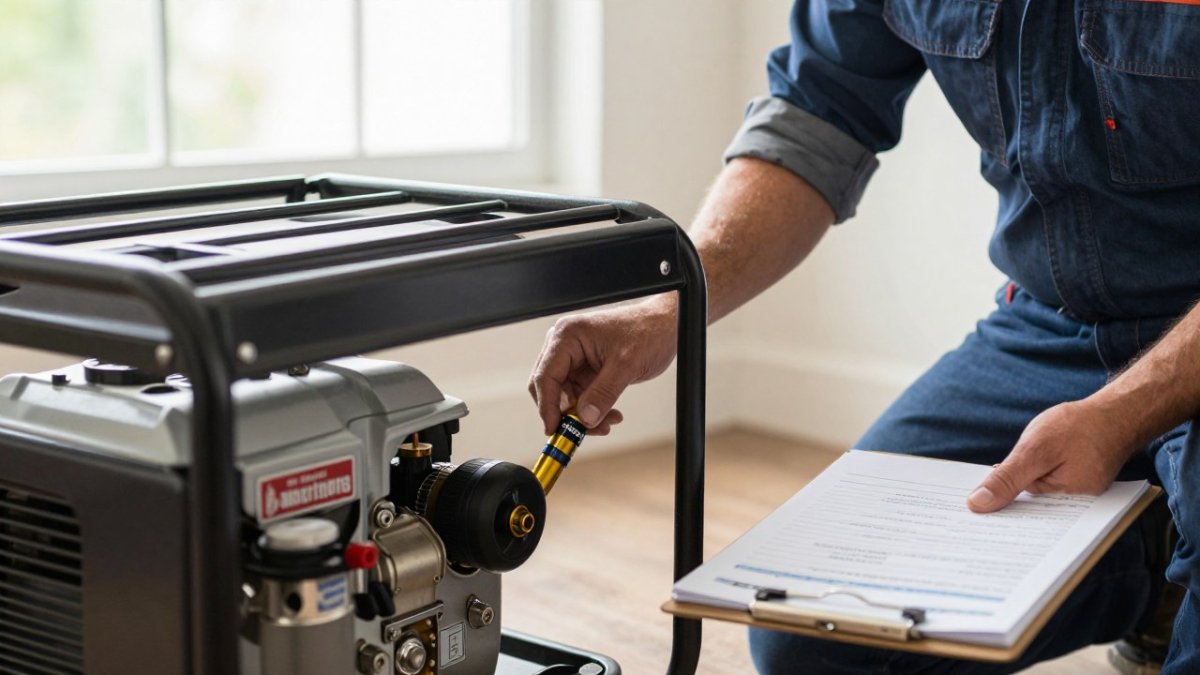
Many standby generators are designed to start and run on their own periodically, often weekly, as an exercise cycle. Check your manual for the schedule that applies to your unit.
You do not run it. The unit does it. Your only job is to notice if it stops happening. A missed weekly test is an early warning sign.
Monthly Owner Checks
Once a month, take five minutes and look at the unit. Check the oil level. Look at the coolant level. Scan for leaks under the unit.
Clear any leaves, debris, or nests away from the vents. Make sure the area around it is clean and open. These small checks catch trouble before it grows.
Annual Professional Service
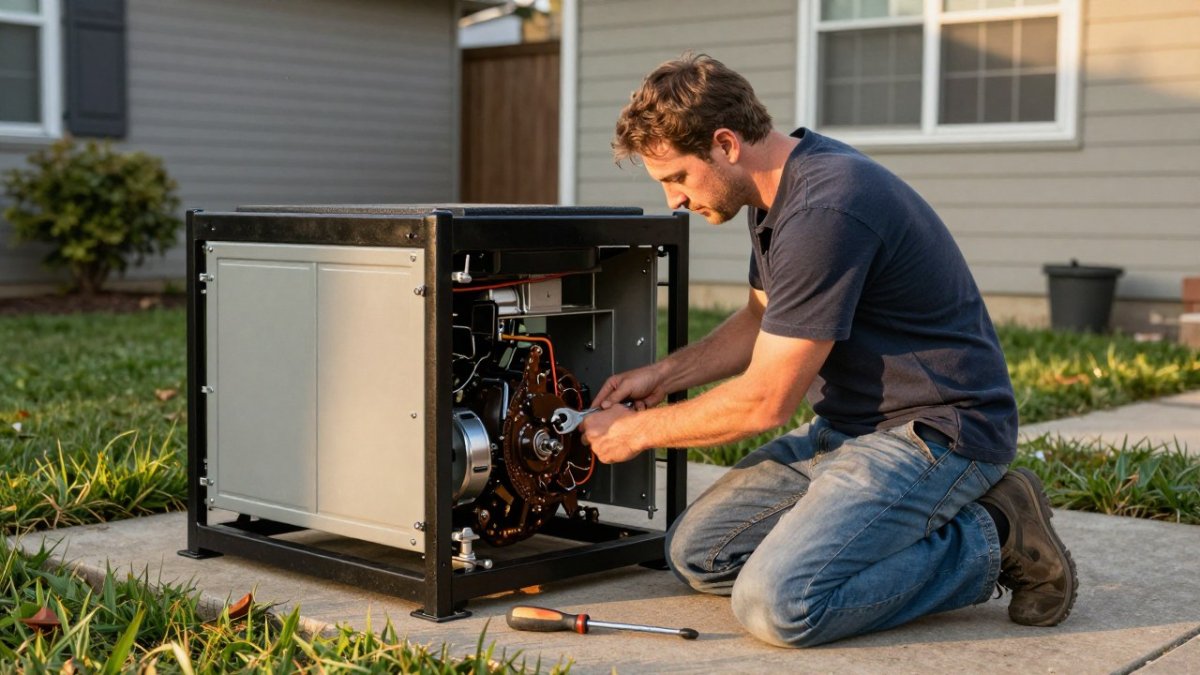
Once a year, a qualified technician should go through the whole unit. A comprehensive service visit can cover the oil and filter change, the air filter, the spark plugs, and the battery, as well as the fuel system, coolant, and transfer switch.
Heavy-Use Maintenance After an Outage
A long outage changes the math. If your generator ran for days, it has packed months of wear into a week. Treat it like heavy use.
After a prolonged run, check the oil and fluids sooner than the calendar says. Many owners book a service visit after a major storm. It is the smart move. Hard running is exactly when wear and tear speeds up.
What Homeowners Can Do vs. What Needs a Technician
You can handle the simple checks. A technician should handle everything with fuel, electricity, or the transfer switch.
Safe for you:
- Check the oil level with the dipstick
- Look at the coolant level when the unit is cold
- Clear debris from vents and the unit's base
- Note any leaks, odd noises, or warning lights
Leave to a pro:
- Oil and filter changes
- Spark plug replacement
- Fuel line and fuel system work
- Transfer switch testing and load tests
- Battery and battery charger service
The line is simple. If it involves opening the fuel system or touching live electrical parts, stop. That work needs a licensed technician.
If you are weighing owner upkeep against pro service, our guide on standby vs. portable generator pros breaks down the maintenance demands of each.
Generac Maintenance Cost: What to Expect and When a Plan Pays Off
Maintenance cost depends on the model, the parts it needs, and what the visit covers. For pricing, contact Hriczak Electrical Contracting LLC for a quote based on your unit.
What Drives the Cost
- The model and size of the generator. Larger units with bigger engines and more coolant generally require more materials and labor than smaller units.
- Which parts and tasks the visit requires. Your manual lists the parts and service tasks due for your model in a given year.
- Any repairs found during inspection. A weak battery, a cracked belt, or a failed charger turns a routine visit into a repair visit.
- Travel and labor. Service call logistics and timing can affect the total.
What a Standard Annual Visit Includes
An annual service on an air-cooled home standby unit can include the following items, depending on the model and the work needed:
- Oil and oil-filter change with the correct oil for your model
- Air-filter inspection or replacement
- Spark-plug inspection or replacement
- Battery load test and charger check
- Fuel-system and fuel-line visual inspection
- Coolant check on liquid-cooled units
- Transfer-switch inspection and a load test to confirm the unit can carry the home
If a quote does not list the transfer-switch check and the load test, ask why. Those two items are what separate a real annual service from an oil change.
When a Maintenance Plan Pays Off
Some homeowners find a maintenance arrangement helpful if they would rather not track the service calendar themselves. Ask about the specific terms, including what is covered and how labor is handled.
Watch out: a plan that only covers the oil change and skips the transfer switch and load test is not the same product, even if the price looks lower.
Getting an Honest Quote
Ask for a quote based on your unit's model and serial number. Contact Hriczak Electrical Contracting LLC for a quote specific to your unit.
Finding Your Generac Maintenance Schedule PDF and Schedule A Kit
Your generator's maintenance schedule, found in the owner's manual or from the manufacturer by model and serial number, is a useful document to keep. It lists what the unit needs and when.
The Generac Schedule A maintenance kit bundles the common parts for a standard annual service. It usually includes the oil, oil filter, air filter, and spark plugs for your model.
What Comes in the Generac Schedule A Maintenance Kit
Match parts to your generator's model number before ordering. The wrong parts fit the wrong machine. Your technician can confirm the correct parts before the visit.
Warning Signs Your Generator Needs Service Early
Do not wait for the calendar if you see these signs. They mean the unit needs attention now:
- The weekly exercise cycle stops running
- The unit is slow to start or cranks and quits
- You see oil or coolant under the unit
- The battery looks corroded or weak
- Warning lights stay on
- The engine runs rough or surges
- You smell fuel near the unit
Any fuel smell is a stop sign. Turn the unit off and call a technician. Do not poke at the fuel system yourself.
Schedule Your Standby Generator Service with Hriczak
A standby generator's reliability depends on consistent maintenance. Routine checks and service work together to keep the unit ready.
Hriczak Electrical Contracting LLC is an authorized Generac installer with over 18 years of experience. Our licensed and certified electricians handle full-service maintenance and troubleshooting, and we offer 24-hour emergency service.
If you are still deciding whether a generator is right for your home, our article on whether a standby generator is worth the investment walks through the decision. And if you want to understand why setup affects upkeep, read why standby generators need professional installation.
Ready to book? Learn the steps to hiring a trusted electrician and then get in touch. Get started with Hriczak Electrical Contracting LLC and keep your backup power ready for the next outage.
Your generator will sit quietly for months and then need to work perfectly in a storm. The only way to trust it is to service it on schedule. Hriczak Electrical Contracting LLC handles the annual visit, the load test, and the transfer switch check so nothing gets missed.
Frequently Asked Questions
How much does it cost to have a Generac generator serviced?
Generac maintenance cost varies by model, location, and whether parts like filters and spark plugs are included. A typical annual service visit covers oil and filter changes, air filter inspection, spark plug check, battery test, and a load test. Because pricing depends on your specific unit and service plan, request a quote from a licensed Generac installer for an accurate figure.
Can I service my standby generator myself?
You can safely handle owner-level tasks: checking oil and coolant levels, inspecting the exterior for debris or leaks, and running the weekly exercise cycle. Oil changes, valve adjustments, transfer switch testing, and load tests require a qualified technician. Attempting those yourself can void warranties and create safety hazards, especially with fuel systems and high-voltage connections.
Should a standby generator be serviced after a power outage?
Yes. After any outage lasting more than a few hours, check the oil level and inspect for leaks or unusual noises. After extended operation, consult your manual and consider a professional inspection even if annual service is not yet due.
What is the most common problem with Generac generators?
Battery problems are a common cause of starting issues, and can be related to charger condition or battery age. A dead battery prevents the generator from starting during an outage. Regular weekly exercise cycles and annual battery testing catch this early. Other common problems include clogged air filters, low oil levels, and fuel supply issues, all addressed in routine maintenance.