 how-to
Why Standby Generators Need Professional Installation
Table of Contents
- Why Standby Generators Need Professional Installation
- Standby Generator Installation Requirements: What the Job Actually Involves
- Standby Generator Transfer Switch Installation and Why It Matters
- Standby Generator Placement and Clearance: Codes You Cannot Skip
- Permits, Inspections, and Code Compliance
- Standby Generator Installation Cost: What Drives the Quote
- The Step-by-Step Installation Timeline
- Common DIY Mistakes and Warranty Risks
- Frequently Asked Questions
Last Updated: October 21, 2026
Why Standby Generators Need Professional Installation
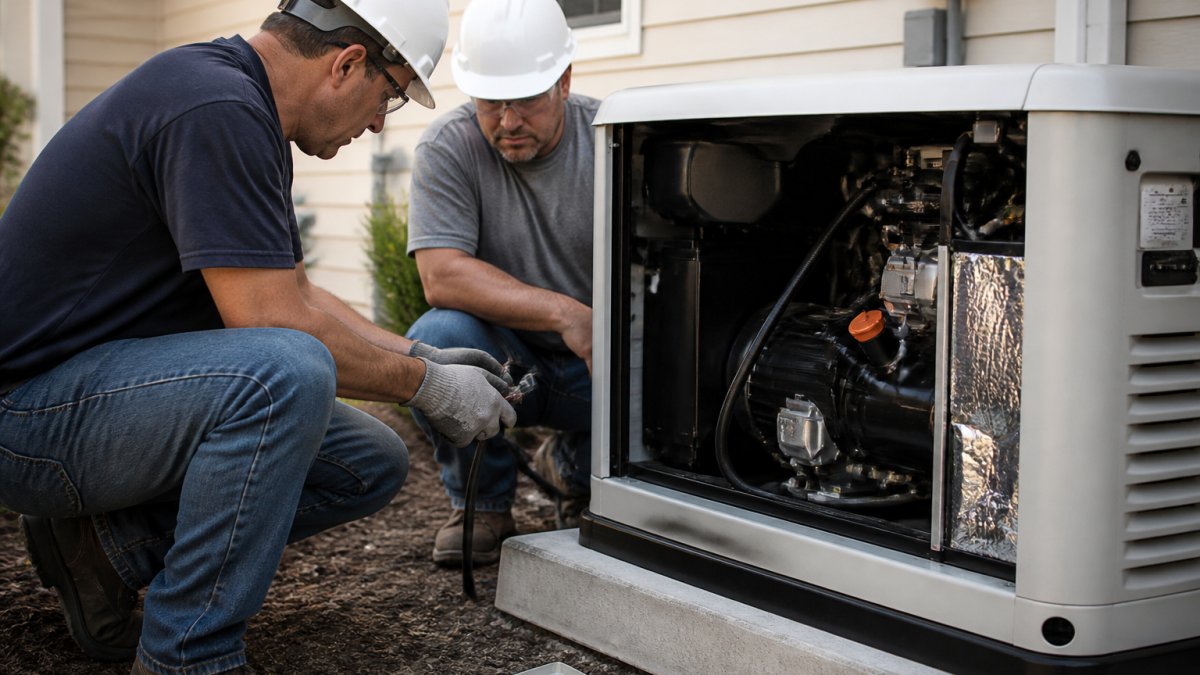
A standby generator is a permanent appliance wired into your home's electrical system, and it runs on natural gas or propane.
Here's the part most homeowners get wrong: they shop for the generator first and treat installation as an afterthought. In practice, the install decides whether the system works at all.
Below, we walk through the requirements, the timeline, and the mistakes that void warranties and fail inspections.
Standby Generator Installation Requirements: What the Job Actually Involves
Standby generator installation requirements cover four connected systems: the electrical load, the transfer switch, the fuel supply, and the physical site. Miss any one of them and the unit may not start, may not carry your home, or may fail inspection. A qualified installer assesses all four before anyone orders equipment.
Load Calculation and Generator Sizing
Sizing starts with a load calculation, not a guess. Your installer adds up the wattage of the appliances you want to run during an outage, then separates essential circuits from the rest. Starting watts for motors and compressors matter as much as running watts.
Get this wrong and you face two bad outcomes:
- Too small: the generator trips when the furnace and fridge kick on together.
- Too large: you pay more for equipment and fuel than the home ever needs.
A proper load calculation follows the method in the National Electrical Code, which sets the rules for service and feeder sizing.
Electrical, Fuel, and Structural Connections
The electrical side includes wiring the generator to a transfer switch and bonding it correctly to your electrical panel. The fuel side means running a dedicated line sized for the unit's demand, whether that's natural gas or propane. Structural work covers a concrete pad or composite base rated for the unit's weight and local frost depth.
Each connection has its own code requirements. A licensed electrician handles the wiring and coordinates the fuel work with a qualified gas fitter.
Standby Generator Transfer Switch Installation and Why It Matters
A transfer switch is the device that disconnects your home from the utility and connects it to the generator. It prevents backfeed, the dangerous condition where generator power flows backward into utility lines and endangers line workers.
Standby generator transfer switch installation is where a lot of DIY jobs go wrong. The switch must match the generator's capacity and your panel's configuration.
Two common setups:
- Whole-house: one automatic transfer switch carries the entire panel.
- Essential circuits: a smaller switch powers a subpanel with selected circuits.
The choice affects cost and complexity. Your installer should explain the trade-offs before you commit.
Standby Generator Placement and Clearance: Codes You Cannot Skip
Standby generator placement and clearance follow manufacturer instructions and local code, and both are enforced at inspection. Units need space for airflow, exhaust dispersal, and service access. Clearances from windows, doors, and combustible walls protect occupants from exhaust and heat.
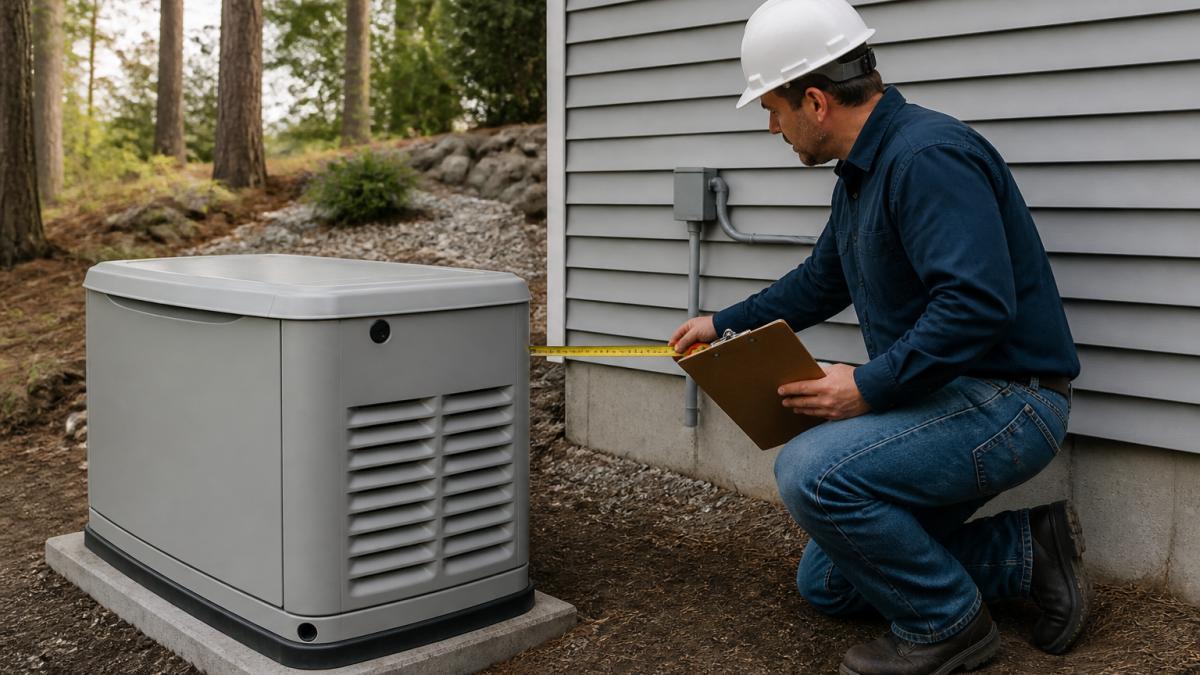
Ventilation and exhaust routing are not optional details. Carbon monoxide is colorless and odorless, and a generator placed too close to a bedroom window creates a real risk (the CDC). The CDC guidance on carbon monoxide explains why exhaust placement matters so much.
Noise is the other factor. Many neighborhoods have local sound limits, and placement affects how loud the unit sounds inside the house. A site assessment catches these issues before the pad is poured.
Permits, Inspections, and Code Compliance
Permits and inspections are mandatory in nearly every jurisdiction, and they protect you as much as the public. A typical project needs an electrical permit and often a building or mechanical permit for the pad and fuel line. The exact requirements vary by city and county, so your installer should confirm them before work begins.
Inspections usually happen in stages:
- Rough-in inspection before walls and trenches are closed.
- Final electrical inspection after wiring is complete.
- Fuel and mechanical inspection where required.
Keep every inspection record. Insurers and future buyers often ask for proof that the work was permitted and passed.
Standby Generator Installation Cost: What Drives the Quote
Standby generator installation cost is not a single number, it is the sum of five separate line items, and each one moves independently. Homeowners who understand the breakdown can compare quotes honestly instead of comparing one lump sum against another.
The five line items that make up a typical quote:
- Equipment, the generator itself, plus the automatic transfer switch if it is not bundled. Whole-house units with larger transfer switches cost more than essential-circuit setups.
- Electrical labor and materials, wiring from the generator to the transfer switch, the transfer switch to the panel, conduit, disconnects, and any panel upgrades needed to bring an older service up to code.
- Fuel work, a dedicated natural gas or propane line sized for the unit's demand, plus a regulator or meter upgrade if the existing supply cannot handle the added load. Propane adds the tank and its placement.
- Site preparation, a concrete pad or composite base rated for the unit's weight and local frost depth, trenching for fuel and conduit, and any grading or landscaping restoration.
- Permits and inspection fees, set by the jurisdiction, not the contractor, and usually passed through at cost.
What moves the quote most, in rough order of impact:
- Generator capacity and transfer switch type. A larger whole-house unit with a service-entrance rated switch costs more in equipment and in labor than a smaller essential-circuit system.
- Distance from the generator to the panel and the gas meter. Long runs mean more conduit, more wire, and more trenching.
- Whether the fuel supply needs a meter or regulator upgrade. A home with an undersized gas service may need utility coordination before the generator can run at full load.
- Condition of the existing electrical panel. An older panel that cannot accept the transfer switch may need replacement, which is a separate electrical project.
- Site access and trenching. A pad poured close to the house with a short trench is cheaper than a remote placement across a driveway or patio.
A common pattern is for the equipment to be the largest single line and for site-specific labor to be the largest source of variance between two quotes for the same generator. That is why two neighbors with identical units can pay very different totals.
How to read a quote before you sign:
- Ask for the five line items above to be broken out separately, not bundled into one price.
- Confirm whether permit fees are included or billed separately.
- Ask what happens if the panel needs an upgrade discovered during rough-in, is that a change order, and at what rate?
- Confirm the quote states the transfer switch model and whether it is service-entrance rated.
We flag panel or fuel upgrades before work begins rather than after.
The Step-by-Step Installation Timeline
Most standby generator installations follow the same sequence, and knowing it helps you plan around permits and site work.
| Step | What Happens | Typical Duration |
|---|---|---|
| 1. Site assessment | Load calculation, placement review, fuel and electrical survey | 1 visit |
| 2. Permits | Electrical and building permits filed and issued | 1-2 weeks |
| 3. Site prep | Pad poured, trenching for fuel and conduit | 1-3 days |
| 4. Equipment set | Generator placed, anchored, and leveled | 1 day |
| 5. Connections | Wiring, transfer switch, fuel line, bonding | 1-2 days |
| 6. Inspection | Rough-in and final inspections | Scheduled by jurisdiction |
| 7. Commissioning | Startup, transfer test under load, handover | 1 visit |
Step 2, Permits. Electrical and building permits are filed, and the jurisdiction reviews the plan.
Step 4, Equipment set. The generator is placed, anchored, and leveled.
Step 6, Inspection. The final electrical inspection and any fuel or mechanical inspection are scheduled by the jurisdiction.
Step 7, Commissioning and handover. This is the step homeowners overlook and the one that proves the system works. A proper commissioning visit includes:
- Startup under no load, to confirm the unit starts, runs, and stabilizes on its own.
- Automatic transfer test, to confirm the transfer switch disconnects from the utility and connects the generator within the expected time after a simulated outage.
- Load test, to confirm the generator carries the essential circuits or the whole panel without tripping, including motor starting loads like a furnace or well pump.
- Retransfer test, to confirm the switch returns the home to utility power and shuts the generator down safely.
- Safety checks, including carbon monoxide alarm verification and a review of exhaust routing.
- Handover walkthrough, covering maintenance intervals, oil and filter schedules, exercise-cycle settings, and what to do if the unit fails to start.
Ask for the commissioning checklist and the test results in writing before the job starts.
At Hriczak Electrical Contracting LLC, we handle the load calculation, permits, wiring, fuel coordination, and commissioning as one job, and we leave you with the test records.
Common DIY Mistakes and Warranty Risks
DIY installation mistakes tend to fall into the same few categories. The most serious is improper transfer switch wiring, which creates backfeed risk. Others include undersized fuel lines, wrong clearances, and unpermitted work that fails inspection later.
Warranty and insurance consequences are real. Manufacturers can deny claims when installation does not follow their instructions. Insurers may decline to cover damage from unpermitted electrical work. Correcting a bad install often costs more than doing it right the first time.
At Hriczak Electrical Contracting LLC, we are an authorized Generac installer with licensed electricians on staff, and we handle the load calculation, permits, wiring, and commissioning as one job.
Frequently Asked Questions
Can I install a standby generator myself?
A standby generator installation involves high-voltage wiring, fuel line connections, and automatic transfer switch integration, all of which require licensed trade work in most jurisdictions. Beyond the electrical risk, a DIY install can void the manufacturer warranty and may not pass inspection. Homeowners insurance policies can also deny claims tied to unpermitted work. A licensed electrician handles the load calculation, permits, and inspection so the system operates safely and legally during an outage.
What permits are needed to install a standby generator?
Most jurisdictions require at least an electrical permit and often a building or mechanical permit for the generator pad and fuel connection. Local zoning may also apply for placement and noise. The permit process typically includes a load calculation, site plan, and equipment specifications. A licensed installer pulls the permits, schedules the inspection, and corrects any issues the inspector flags. Skipping permits can result in fines, forced removal, or problems when you sell the home.
How long does professional standby generator installation take?
Most residential installations take one to three days on site once permits are approved and equipment is delivered. The timeline includes setting the pad, running the fuel line, wiring the transfer switch, and commissioning the system. Permit approval can add one to four weeks depending on the jurisdiction. Complex sites with long conduit runs, underground fuel lines, or HOA approval requirements may take longer. Your installer should give you a schedule before work begins.
Does a standby generator need regular professional maintenance?
Yes. Standby generators should be exercised weekly and serviced annually, including oil changes, filter replacement, battery checks, and transfer switch testing. Annual service keeps the unit ready for an outage and protects the warranty. A qualified technician also verifies that the automatic transfer switch still isolates utility power correctly, which is the safety function that prevents backfeeding. Skipping maintenance is the most common reason a generator fails when the power actually goes out.
A standby generator is a safety system, and safety systems deserve a licensed hand. If you are weighing a backup power system for your home, our team at Hriczak Electrical Contracting LLC can run the load calculation, size the unit, and handle permits and inspections from start to finish. We bring over 18 years of experience and a customer-focused approach to every install. Get a quote today and protect your home before the next power outage.