 ultimate-guide
Cost to Replace Old Electrical Wiring in 2026
Table of Contents
- What Drives the Cost to Replace Old Electrical Wiring in 2026
- Signs of Outdated Electrical Wiring You Should Not Ignore
- Cost to Upgrade Electrical Panel 2026: What Changes the Number
- How Long Does It Take to Rewire a House?
- Partial Rewire vs. Full Rewire: Which One Do You Actually Need?
- Hidden Costs: Permits, Drywall Repair, and Insurance
- How to Get an Accurate Rewiring Estimate
- Frequently Asked Questions
Last Updated: October 2, 2026
What Drives the Cost to Replace Old Electrical Wiring in 2026
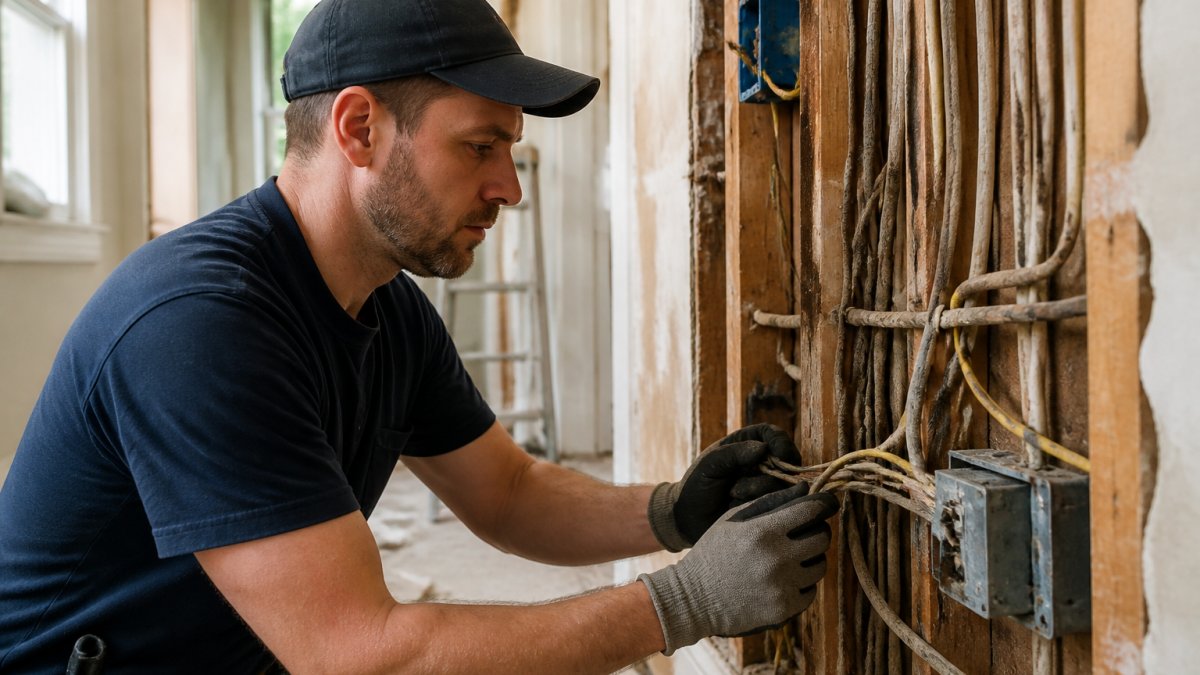
The cost to replace old electrical wiring in 2026 depends on four variables: square footage, wiring runs, labor access, and materials. Homeowners are really asking how much of their house has to be opened up.
Hriczak Electrical Contracting LLC has over 18 years of industry experience.
Wiring is cheap. What costs money is electrician time, the openings cut into finished surfaces, and whether the system can be extended or rebuilt from the service entrance inward.
U.S. Fire Administration residential electrical fire data
What a Rewire Actually Costs: The Four Line Items
Nearly every rewiring estimate breaks into the same four buckets. Understanding each one separates a real quote from a placeholder number.
Labor is the largest line item, typically 50 to 65 percent of the total on a finished home. It is billed hourly or flat-rate, reflecting license, market, and access difficulty, the same job can differ by thousands.
Materials are the smallest bucket, usually 15 to 25 percent, covering conductors, boxes, devices, breakers, the panel, and connectors. Copper moves with commodities, so quotes shift quarterly.
Permits and inspection are a fixed, non-negotiable line tied to the work's valuation. Skipping the permit to save a few hundred dollars is the worst economy in this trade, it can void insurance and complicate a future sale.
Restoration is the line that gets left off.
Square Footage and Wiring Runs
Square footage sets the floor, not the final number. Larger homes need more circuits, outlets, switches, and junction boxes, so the total climbs with every room.
Labor, Materials, and Access
Labor is the largest line item on nearly every estimate, materials the smallest, and access the wild card that swings the total more than either.
Why the Same House Gets Three Different Quotes
Two electricians can look at the same house and return numbers differing by 40 percent, and both can be honest. It comes down to scope assumptions.
Signs of Outdated Electrical Wiring You Should Not Ignore
The clearest signs of outdated electrical wiring are two-prong outlets with no ground, a fuse box instead of a breaker panel, warm or discolored outlet covers, and a faint burning smell near switches. Any one warrants an inspection before you plug in another appliance.
Knob-and-Tube and Aluminum Wiring
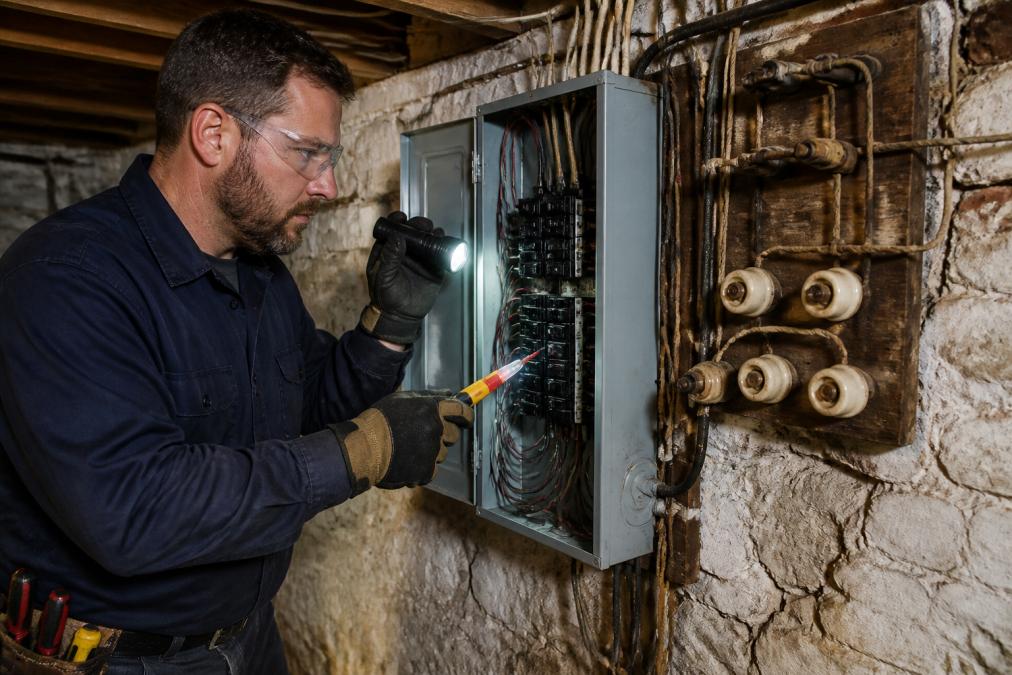
Knob-and-tube wiring runs individual conductors through ceramic knobs and tubes with no ground. It was never designed for modern loads, and its insulation becomes brittle with age.
Warning Signs a Home Inspection Flags
A home inspector typically flags an ungrounded system, a panel with no main disconnect, double-tapped breakers, missing AFCI or GFCI protection, and exposed splices outside a junction box.
Cost to Upgrade Electrical Panel 2026: What Changes the Number
The cost to upgrade electrical panel 2026 work hinges on the service size you move to and how much old equipment can be reused. A panel swap is contained; a service upgrade touches the meter, mast, grounding electrode, and sometimes the utility's drop.
Service Upgrade, Sub-Panel, and Circuit Capacity
An electrical load calculation decides whether a service upgrade is required or a sub-panel will do. It adds fixed appliances, general lighting, and planned new loads, then compares the total against the existing service rating.
How Long Does It Take to Rewire a House?
A full rewire typically runs several days to a few weeks, depending on size, access, and whether walls are open. A single-story home with an unfinished basement moves fastest; a finished multi-level home with plaster walls takes longest, because every run must be fished through closed cavities.
| Project Scope | Typical Duration | Main Time Driver |
|---|---|---|
| Panel replacement only | 1 day | Utility disconnect scheduling |
| Partial rewire, one floor | 2-4 days | Access behind finished walls |
| Full rewire, open basement | 1-2 weeks | Circuit count and runs |
| Full rewire, finished home | 2-4 weeks | Drywall and plaster restoration |
Partial Rewire vs. Full Rewire: Which One Do You Actually Need?
A partial rewire is right when dangerous sections are isolated and the rest of the system tests sound. A full rewire is right when the wiring method itself is obsolete throughout the house.
Hidden Costs: Permits, Drywall Repair, and Insurance
Permits, drywall repair, and insurance never appear in a per-square-foot estimate, and they surprise homeowners at the end. Budget for them from the start.
How Old Wiring Affects Your Homeowner's Policy
Insurers price risk, and aging electrical systems are a known fire-loss driver. A carrier seeing knob-and-tube wiring, a fuse box, or a panel with no main disconnect may respond in one of four ways:
- Decline to write the policy on a new purchase until the wiring is addressed.
- Write the policy with an exclusion for electrical fire losses, which leaves you exposed on the exact peril you were worried about.
- Require an inspection and a written electrician's report before binding or renewing.
- Renew as normal but raise the premium to reflect the added risk.
What to Do Before Your Next Renewal
If your home still has knob-and-tube or aluminum branch wiring, do three things before renewal:
- Read your declarations page for any electrical exclusion or inspection requirement, usually in the endorsements, not the main policy jacket.
- Ask your agent directly whether the wiring method affects eligibility, and get the answer in writing.
- Get a licensed electrician's inspection report documenting the panel, grounding, and branch circuits. A documented, partially updated system is easier to insure than an unknown one.
Smart Home and EV Charger Readiness
Smart switches, smart panels, and EV chargers all need what old wiring cannot reliably provide: a grounded circuit, adequate capacity, and a neutral at every switch box. Wiring for these during a rewire costs far less than retrofitting later.
How to Get an Accurate Rewiring Estimate
Ask for these five things in writing:
- A circuit-by-circuit scope: what gets replaced, what stays
- Whether the permit is included and who pulls it
- Whether drywall repair is in the quote or excluded
- The panel's final capacity and spare breaker slots
- A written change-order process for anything found after walls open
Hriczak Electrical Contracting LLC provides 24-hour emergency service, and our licensed and certified electricians will walk the panel with you before quoting anything.
Frequently Asked Questions
How much does it cost to rewire a 2,000 sq ft house in 2026?
The cost for a full rewire of a 2,000 sq ft home depends on factors such as how accessible the wiring runs are, whether the walls are finished, and whether you also need an electrical panel upgrade. Older homes with knob-and-tube or aluminum wiring often cost more because the old wiring has to be removed and replaced with copper. Get a written estimate from a licensed electrician after an on-site inspection, since square footage alone never tells the whole story.
Can I upgrade my electrical panel without rewiring my house?
Yes. A panel upgrade and a whole-house rewire are separate jobs. If your existing wiring is copper in good condition and meets code, you can upgrade just the panel to add capacity for a service upgrade, sub-panel, or new circuits. The cost to upgrade electrical panel 2026 depends on amperage, whether the meter base needs replacing, and permit fees. An electrician will run an electrical load calculation first. If the wiring itself is failing, a panel swap alone will not fix the underlying problem.
What are the signs of outdated electrical wiring I should watch for?
Common signs of outdated electrical wiring include flickering lights, warm or discolored outlets and switches, a burning smell near the breaker box, frequent tripped breakers, two-prong outlets with no grounding, and cloth-wrapped or brittle wiring insulation visible in the basement or attic. Knob-and-tube and aluminum wiring are two specific red flags. If your home was built before 1970 and has never been rewired, ask a licensed electrician for an inspection. AFCI breakers and GFCI outlets are code requirements in many areas precisely because older wiring lacks this protection.
Does homeowners insurance cover the cost of replacing outdated wiring?
Standard homeowners insurance usually does not cover wiring replacement as routine maintenance, since wear and tear is excluded. However, if a covered event like a fire or lightning strike damages the wiring, the repair may be covered. Some carriers will also decline new policies or raise premiums on homes with knob-and-tube or aluminum wiring until an electrical system overhaul is documented. Check with your insurer before you buy an older home, and keep the electrician's inspection report and permit paperwork on file.
How long does it take to rewire a house, and can I stay in it?
A full rewire of an average home usually takes 3 to 7 days of active work, but the project timeline stretches to 2 to 4 weeks once you factor in permits, inspections, and drywall repair. Larger homes or homes with hard-to-reach wiring runs take longer. Many homeowners stay in the house during the work, though power will be off during portions of each day. If the home is occupied, the electrician will typically work room by room to keep at least one bathroom and kitchen circuit live.