 Ultimate guide
The Real Benefits of Whole House Standby Generators
Last Updated: November 15, 2026
Quick Summary
Standby generators are permanently installed backup power systems that start automatically within seconds of an outage and run on natural gas or liquid propane. They protect HVAC systems, sump pumps, refrigeration, security systems, and medical equipment, and many homeowners view them as a long-term investment in their property.
- The automatic transfer switch detects an outage, starts the generator, and transfers the load back when utility power returns.
- Portable generators cost $800 to $2,000, while whole house standby units run $2,000 to $7,000 before installation.
- Manufacturers often tie warranty coverage to documented service performed at the intervals in the owner's manual.
- Check HOA covenants as well as city permits before purchase, since an HOA dispute after installation is expensive to unwind.
- An undersized gas meter or half-full propane tank can make a generator fail under load exactly when it is needed.
Table of Contents
- How a Whole House Standby Generator Protects Your Home
- The Benefits That Justify the Investment
- Portable vs Whole House Generator: Which Fits Your Needs
- What a Backup Generator for Home Cost Actually Includes
- Whole House Generator Maintenance Requirements
- The Drawbacks Nobody Mentions
- Getting a Standby Generator Sized and Installed for Your Home
- Frequently Asked Questions
How a Whole House Standby Generator Protects Your Home
Standby generators are permanently installed backup power systems that start automatically within seconds of a utility service interruption and run on natural gas or liquid propane. Consumer Reports calls standby units the "gold standard" in backup power, and the numbers explain why homeowners keep buying them: the residential market is growing at an 8.3% compound annual growth rate as grid instability worsens (Jolt Electric's 2026 market analysis). At Hriczak Electrical Contracting LLC, we are an authorized Generac installer, and the benefits of whole house standby generators come down to one thing: your home keeps running while the neighborhood goes dark.
Automatic Transfer Switch and Restoration
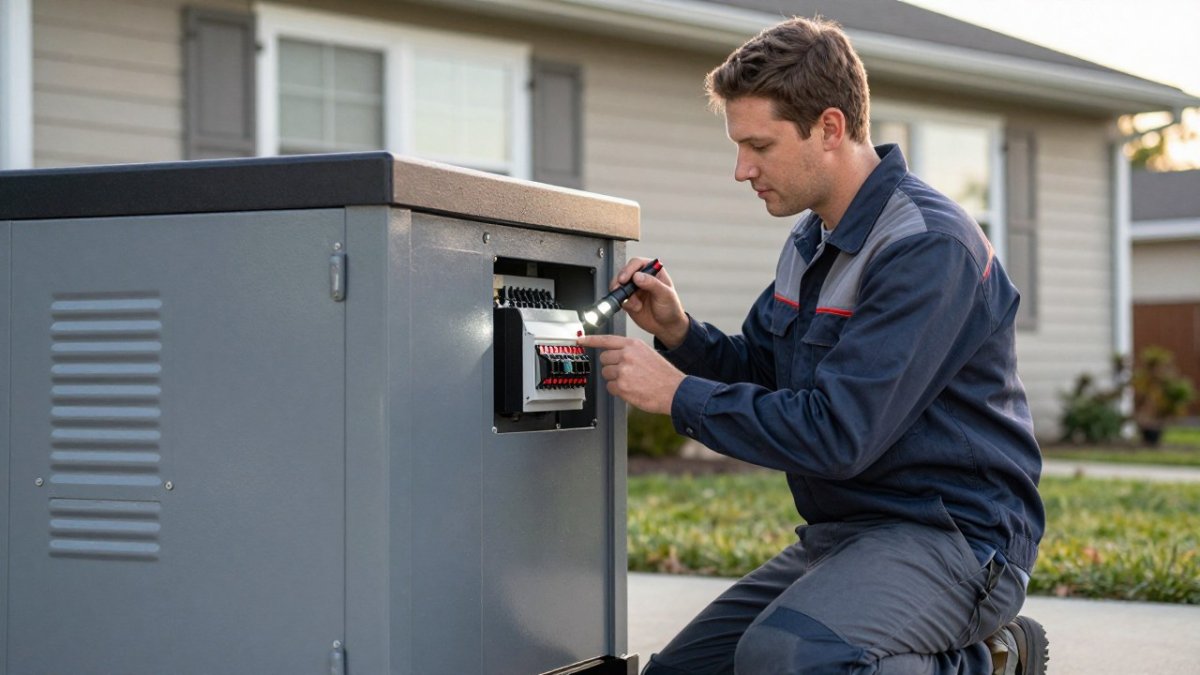
The automatic transfer switch is the component that makes the whole system hands-off. It monitors incoming utility voltage, detects an outage, and signals the generator to start. When utility power returns, the switch transfers the load back and shuts the generator down.
The Benefits That Justify the Investment
The financial case is stronger than most homeowners expect. Many homeowners view a standby system as a long-term investment in their property. Beyond resale value, a standby system protects the home infrastructure that fails during outages: HVAC systems, sump pumps, refrigeration, security systems, and medical equipment. Peace of mind is a benefit many owners mention first, and protecting home systems such as HVAC, sump pumps, and refrigeration is a major reason homeowners choose a standby system.
Portable vs Whole House Generator: Which Fits Your Needs
The choice comes down to coverage, convenience, and cost. A portable generator costs far less upfront but requires manual setup, fuel storage, and careful carbon monoxide safety. A standby unit runs on your home's fuel source and powers circuits automatically.
| Feature | Portable Generator | Whole House Standby |
|---|---|---|
| Startup | Manual, wheel it out | Automatic in seconds |
| Fuel | Gasoline, stored on site | Natural gas or liquid propane |
| Power coverage | Selected appliances via cords | Whole-home or managed circuits |
| Cost | $800 to $2,000 | $2,000 to $7,000 before installation |
| Best for | Short outages, budget buyers | Frequent outages, medical needs |
Portable pricing comes from Garber Electric's 2025 comparison. For a deeper side-by-side, read our standby vs portable generator pros guide.
What a Backup Generator for Home Cost Actually Includes
Pricing depends on the unit, the electrical panel and fuel setup, and the scope of the installation, so we quote each job individually. Contact Hriczak Electrical Contracting LLC through our website for current pricing or a quote. Our breakdown of what standby generator installation costs covers each line item in detail.
Whole House Generator Maintenance Requirements
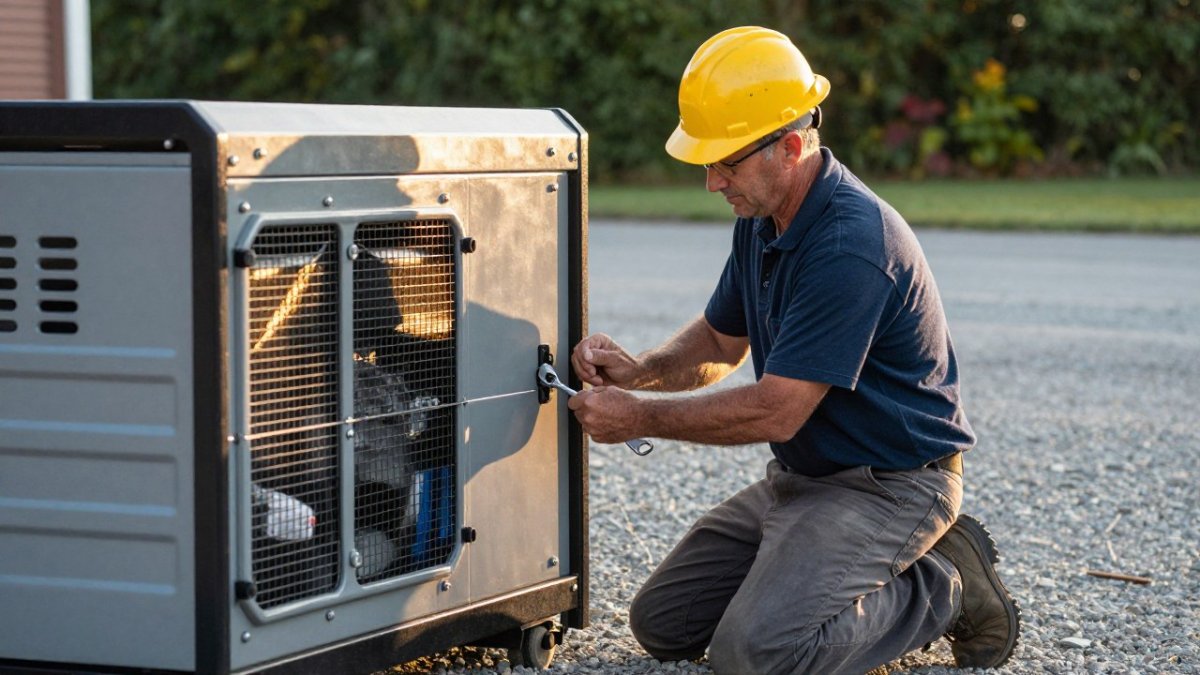
Standby units are simple machines, but they sit idle for months and then must carry the full house load on a moment's notice. That is why manufacturers build a service schedule into the owner's manual and tie warranty coverage to documented proof of it. Units that sit idle between service visits can fail during an outage, which is why regular exercise and load checks matter.
The Annual Service Visit, Step by Step
A typical annual inspection on an air-cooled home standby unit covers the following, and a competent technician will document each item:
The Rest-of-Year Checklist
Between professional visits, a few owner-level tasks keep the unit ready:
- Monthly: glance at the controller display for fault or warning codes and confirm the weekly exercise is still scheduled.
- Quarterly: clear leaves, snow, and debris from the enclosure and the air intake; confirm the battery charger indicator is normal.
- Before storm season: confirm the fuel supply (propane level, gas meter capacity), test that the transfer switch will actually transfer, and verify the generator's breaker is on.
- Annually: schedule the professional service, keep the invoice, and log the date and hours.
Why the Paper Trail Matters
Manufacturers often condition warranty coverage on service performed at the intervals in the owner's manual, so keeping service records is worthwhile. Keep every invoice, note the hour meter reading at each visit, and store the manual with the service log.
Our guide to yearly standby generator maintenance covers how to schedule service before storm season.
The Drawbacks Nobody Mentions
Honest downsides exist, and the ones that cause the most friction after installation are not the ones sales brochures mention. The upfront capital expense is significant compared with portable options, and some smaller households question whether full-circuit coverage is worth the cost, a debate that comes up often in owner forums. But the issues that generate the most complaints and the most surprise are noise, local rules, insurance, and fuel consumption.
Noise: What Neighbors Actually Hear
A home standby generator is louder than most buyers expect. Standby generators can be louder than many buyers expect, so noise is worth considering during placement. The catch is that sound carries at night, and the unit runs during exactly the moments neighbors are home and already stressed: storms, heat waves, and grid events. Liquid-cooled units are quieter but cost more. Placement matters more than the spec sheet: putting the unit on the side of the house away from bedroom windows and neighboring lots, and avoiding corners where sound reflects, does more for neighbor relations than any single model choice.
Zoning, Setbacks, and HOA Rules
Local rules vary widely and are enforced at the municipal level, so there is no single national standard. Common requirements include:
- Setback distances from property lines and adjacent structures, which vary by municipality.
- Permits and inspections. Most jurisdictions require an electrical permit and often a mechanical or gas permit; the installation is inspected before the utility connection is energized.
- Noise ordinances. Some municipalities cap sound at the property line, which can rule out certain models or placements.
- HOA covenants. Even where the city allows the unit, a homeowners association may restrict placement, screening, or size. Review the covenants before signing a contract, an HOA dispute after installation is expensive to unwind.
- Floodplain and historic-district rules that can dictate elevation or screening.
A common pattern is a homeowner who checks the city permit office but never reads the HOA covenants, then faces a violation notice after the concrete pad is poured. Confirm both before purchase.
Insurance Implications
Whether a standby generator lowers your homeowners insurance premium depends entirely on the carrier and policy form, and there is no uniform national discount. Some carriers may offer credits for backup power or loss-mitigation features, and others may not. The more reliable benefit is claims-side: a generator that keeps sump pumps, refrigeration, and HVAC running can prevent the burst-pipe and food-spoilage losses that drive claims in the first place. Call your agent before installation, ask specifically whether the policy form includes a backup-power credit, and confirm whether the unit needs to be scheduled as personal property or added to the dwelling coverage. Do not assume the discount exists, get it in writing.
Fuel Consumption and Efficiency
Fuel efficiency depends heavily on load and fuel type. A lightly loaded unit burns less than a fully loaded one, but sizing too large wastes fuel and money on every run. Natural gas units draw from the utility line and never need refueling, but the gas meter and service line must be sized to supply the generator's demand in addition to the house, an undersized meter can starve the unit under load. Propane units need a tank sized for the expected outage duration, and the tank must be refilled on a schedule; a common failure is a tank that runs dry mid-outage. Matching the unit to a realistic load calculation, rather than buying the largest model available, is an important efficiency decision for a homeowner.
Watch out: A generator sized for the whole house but fed by an undersized gas meter or a half-full propane tank will fail under load exactly when it is needed, confirm fuel supply capacity as part of the sizing, not after installation.
Getting a Standby Generator Sized and Installed for Your Home
Sizing starts with a load calculation: add up wattage requirements for HVAC, well pump, sump pump, refrigeration, and essentials, then match kilowatt output and surge capacity. Professional installation matters because the work involves fuel connections, transfer switch wiring, permitting, and code compliance. Our team holds a Philadelphia Master License (#061283) and Bethlehem Master License (#M-213) and is an authorized Generac installer. Read why professional standby generator installation is not a DIY job, or explore whether a standby generator is worth the investment.
A standby generator only delivers its promised protection when it is sized correctly, installed to code, and serviced every year. Hriczak Electrical Contracting LLC brings over 18 years of experience, licensed and certified electricians, 24-hour emergency service, and authorized Generac installation to every job. Get started with Hriczak Electrical Contracting LLC and keep your home powered through the next outage.
Frequently Asked Questions
Is a whole house standby generator worth the investment?
For homeowners who face repeated outages or rely on medical equipment, sump pumps, or HVAC systems, the numbers support it. Many homeowners view a standby generator as a long-term investment in their property and household reliability. If outages in your area are rare and short, a portable unit may be the more sensible spend.
How does a standby generator differ from a portable generator?
A standby generator is permanently installed, wired to your home's electrical panel through an automatic transfer switch, and runs on natural gas or liquid propane. It starts within seconds of a utility service interruption without you lifting a finger. A portable generator costs less upfront but must be wheeled out, fueled, and connected manually, and it cannot safely power a whole house without a transfer switch.
Do whole house generators require regular maintenance?
Yes. Maintenance schedules vary by model and fuel source, so follow the manufacturer's interval table and consider a professional service visit. Skipping service is the most common reason a generator fails during the one outage you bought it for.
Will a whole house generator lower my homeowners insurance?
Some carriers may offer discounts for installed standby systems, so ask your insurer directly before you buy. Even without a premium reduction, preventing a single burst pipe or flooded basement often outweighs the annual savings. Document the installation and share the permit paperwork with your agent.