 ultimate-guide
Local Electrical Code Compliance: 2026 Inspection Guide
Table of Contents
- Why Local Electrical Code Compliance Matters More Than Ever in 2026
- NEC Electrical Code Requirements: The National Baseline
- How Local Amendments Override the NEC
- Your Electrical Safety Inspection Checklist for Facility Managers
- Common Electrical Code Violations and How to Fix Them
- Digital Compliance Tracking and Record-Keeping
- How Compliance Reduces Insurance Premiums and Liability
- Retrofitting Older Buildings for Modern Code
- Frequently Asked Questions
Last Updated: October 4, 2026
Why Local Electrical Code Compliance Matters More Than Ever in 2026
Electrical code compliance means meeting every national, state, and municipal wiring standard that applies to a building's electrical system, verified through inspection.
The stakes are not abstract. Missed grounding, overloaded panels, and outdated wiring are leading causes of electrical fires in older buildings, and insurers increasingly ask for inspection records before renewing coverage. Inspectors now expect documented maintenance, not just a system that "works."
NEC Electrical Code Requirements: The National Baseline
The NEC electrical code requirements published by the National Fire Protection Association (NFPA) form the baseline every jurisdiction starts from. The National Electrical Code is a model standard, not federal law, so it only carries legal weight once a state or local government adopts it, most with a lag of one to three cycles.
Key NEC Articles for Safety Inspections
Inspectors focus on a handful of articles again and again:
- Article 210 covers branch circuits, including required GFCI and AFCI protection in dwellings and many commercial spaces.
- Article 250 governs grounding and bonding, the single most common source of violations.
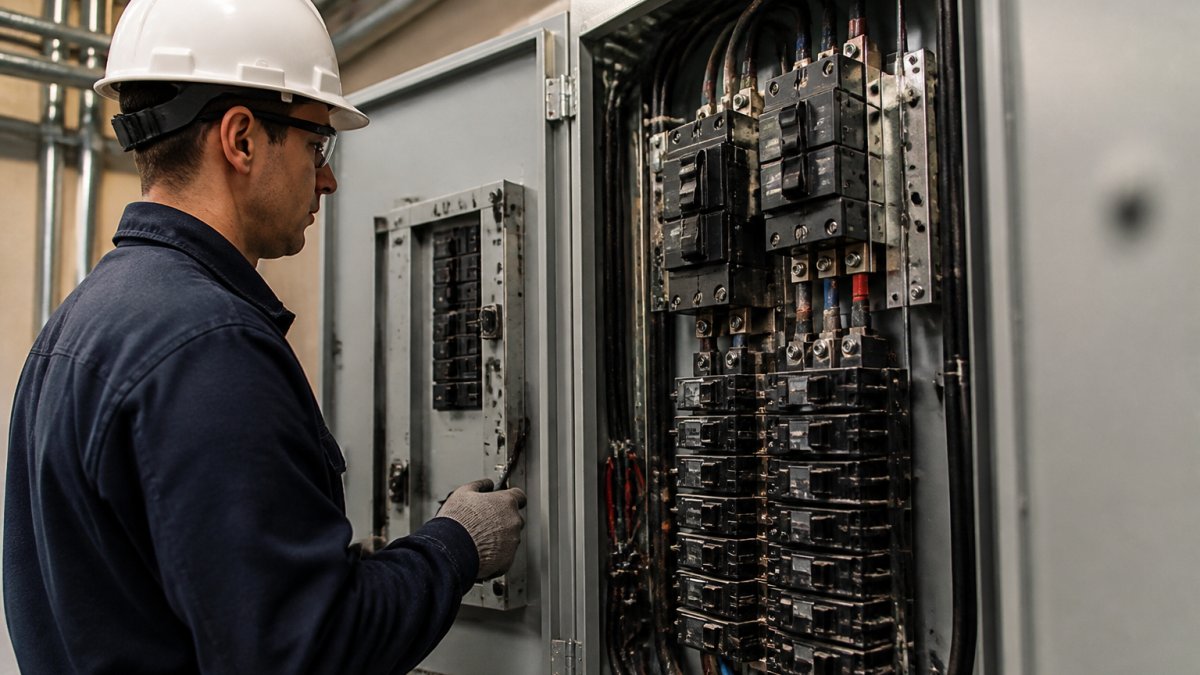
- Article 408 addresses switchboards and panelboards, including electrical panel maintenance and labeling.
For a full list, see the NFPA's National Electrical Code overview, which publishes each edition and its revision cycle.
How Local Amendments Override the NEC
Local amendments override the NEC because states, counties, and cities adopt the code with their own changes, additions, and exceptions.
Two identical buildings in different jurisdictions can face different inspection outcomes.
Before any project, pull the current adopted edition and any local amendments from your building department. The Occupational Safety and Health Administration's electrical safety standards set the workplace enforcement floor, but they do not replace local building codes.
Your Electrical Safety Inspection Checklist for Facility Managers
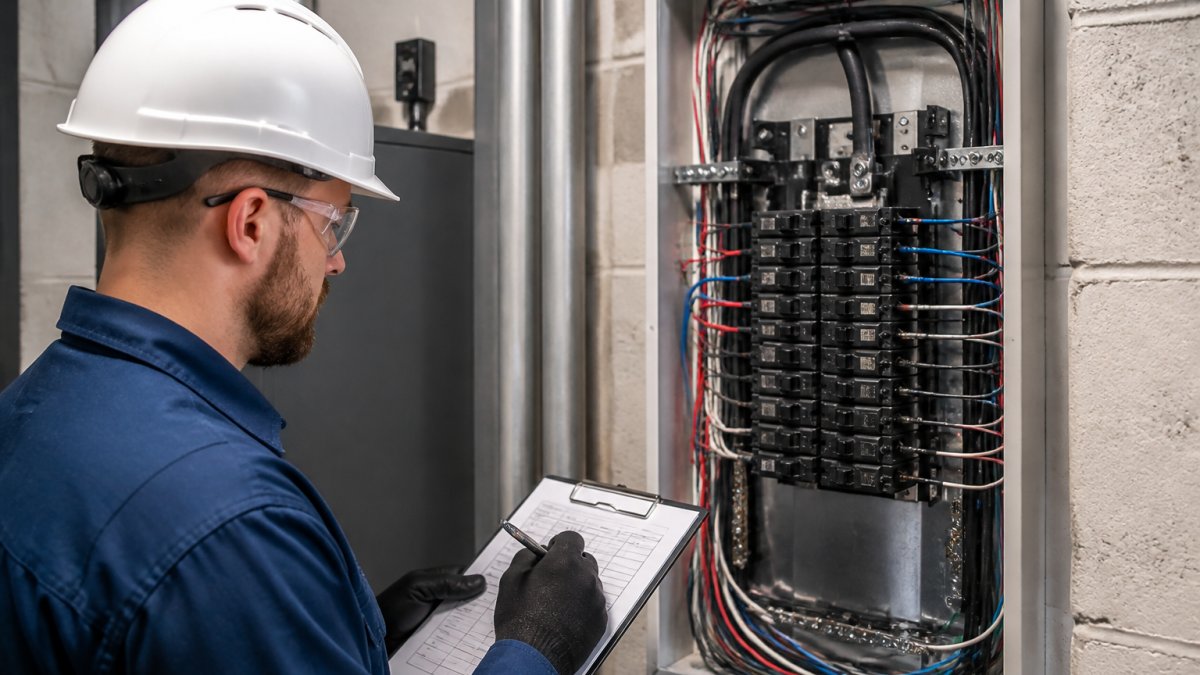
An electrical safety inspection checklist turns a vague "is the building safe?" question into verifiable items. Run this self-audit before scheduling a professional inspection: each item is scored, mapped to the code reference an inspector will cite, and paired with a documentation habit.

How to Score Your Self-Audit
Walk the building in this order and mark each item Pass, Fail, or N/A. A single Fail in the Life-Safety tier means you should not schedule the official inspection until it is corrected, inspectors treat those as stop-work findings.
- Tier 1, Life Safety (must pass before scheduling): grounding and bonding, GFCI/AFCI protection, emergency lighting, panel access clearance.
- Tier 2, Documentation (must pass before renewal): panel directories, arc flash labels, prior inspection reports, permit sign-offs.
- Tier 3, Maintenance (address within 30 days): damaged insulation, discolored outlets, daisy-chained power strips, blocked equipment.
Pre-Inspection Walkthrough Items
Work through these in order and note the code reference next to each Fail:
- Confirm every panel has a clear, up-to-date directory and no missing breaker labels, NEC Article 408.4; a missing directory is one of the most-cited violations on commercial reports
- Check for unused openings in panels and enclosures, NEC Article 408.7; open knockouts are a common finding and a quick fix
- Verify GFCI receptacles trip and reset in wet locations, NEC Article 210.8; test with the built-in test button, not a plug-in tester alone
What to Do With the Results
Sort your Fails into three buckets before you call anyone:
- Fix in-house today: panel directories, open knockouts, cleared access, replaced exit-sign lamps. These cost minutes and remove the most common citations.
- Schedule a licensed electrician: grounding repairs, GFCI/AFCI installation, service upgrades, these require a permit in most jurisdictions.
- Flag for the inspector: anything you cannot verify yourself, such as conductor sizing or concealed wiring. Telling the inspector what you found and could not confirm reads as diligence, not neglect.
For the underlying requirements, the Electrical Safety Foundation's workplace safety resources explain why each item matters and how failures lead to incidents.
A Simple Tracking Template
You do not need software to start. A spreadsheet with these columns satisfies most insurer requests:
| Column | What goes in it |
|---|---|
| Date | When the item was checked or repaired |
| Location | Panel ID, room, or circuit |
| Finding | What you observed |
| Code reference | NEC article or local amendment |
| Tier | 1, 2, or 3 |
| Status | Open / In progress / Closed |
| Evidence | Photo filename or report page number |
| Owner | Who is responsible for closing it |
If you manage multiple buildings, add a property column. The goal is a single running log you can sort by open items the morning an inspector calls.
Common Electrical Code Violations and How to Fix Them
The most common electrical code violations cluster around grounding, labeling, and protection devices, and most are fixable without a full rewire.
Residential vs. Commercial Violation Patterns
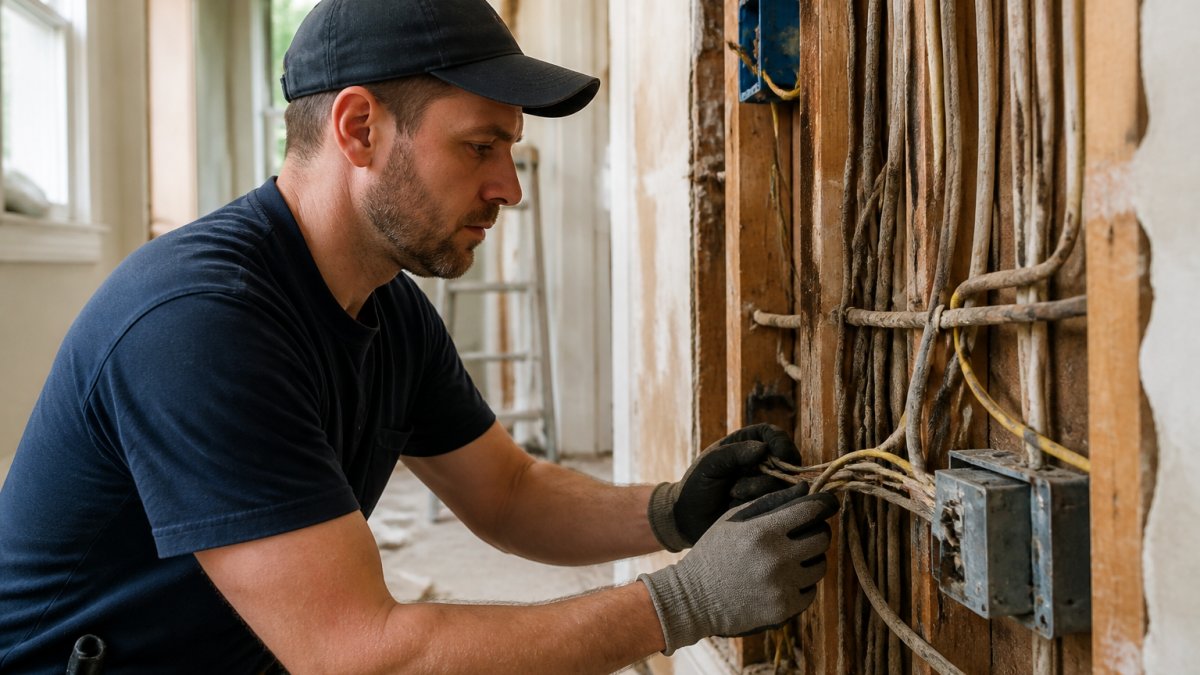
Residential issues tend to be age-related: two-prong outlets with no ground path, undersized service panels, ungrounded three-prong receptacles. Commercial issues tend to be maintenance-related: overloaded circuits after equipment changes, missing arc flash labels, panels blocked by stored materials.
| Violation | Typical Setting | Fix | Priority |
|---|---|---|---|
| Missing panel directory | Both | Label every breaker and update after changes | High |
| Ungrounded receptacles | Residential | Add grounding conductor or GFCI protection | High |
| Blocked panel access | Commercial | Clear 36 inches of working space | Medium |
| Missing GFCI in wet areas | Both | Install GFCI receptacles or breakers | High |
| No arc flash labeling | Commercial | Apply labels per NFPA 70E | Medium |
If you are unsure whether a fix is a repair or a permit-level change, ask before you start. Unpermitted work is its own violation and can complicate a future sale or insurance claim.
Digital Compliance Tracking and Record-Keeping
Digital compliance tracking replaces paper binders with searchable records, and it is the biggest gap in most facilities' programs. When an inspector or insurer asks for the last three inspection reports, "I think they're in a filing cabinet" is not an answer.
A simple system beats a complicated one. Keep a shared folder or maintenance platform with:
- Dated inspection reports and the inspector's credentials
- Photographs of each issue, before and after repair
- Permit numbers and final inspection sign-offs
This is where a partner helps. For facilities with standby generators, we track service intervals alongside the electrical inspection history, since both feed the same compliance file.
How Compliance Reduces Insurance Premiums and Liability
Compliance reduces insurance premiums because insurers price risk, and documented, code-compliant electrical systems present lower risk. Understanding the mechanism lets you negotiate rather than hope.
How Underwriters Actually Use Electrical Records
Commercial property underwriters typically look at three things when they assess electrical risk:
- Age and type of the electrical system. Legacy wiring, fuse boxes, and undersized services raise the loss-cost estimate. A documented upgrade lowers it.
- Inspection frequency and recency. Many carriers ask for the date of the last licensed inspection and whether any citations were issued. A recent, clean report is a credit; a gap of several years is a debit.
- Loss history and open violations. An unresolved citation is treated as a known hazard. Carriers can decline renewal, raise the deductible, or add an exclusion for electrical causes of loss.
The practical takeaway: the same building can be quoted two ways depending on whether the owner can produce a dated inspection report and a log showing open items were closed. That is a documentation problem, not an electrical one, and the cheapest thing to fix.
What to Bring to a Renewal Conversation
Before your next renewal, assemble a one-page summary:
- Date and result of the most recent licensed electrical inspection
- List of any citations and the date each was resolved
- Permit numbers for electrical work completed since the last renewal
Ask your broker to submit this with the renewal application. Carriers that offer electrical-risk credits will not apply them unless the documentation is in front of the underwriter.
The Liability Side
Liability exposure splits into three tracks:
- Regulatory. Local code enforcement can issue fines, require re-inspection at the owner's cost, and in serious cases order the building vacated until repairs are made. Permit denials for future work are common when prior unpermitted work is discovered.
- Civil. If an electrical fire traces back to a known, unresolved violation, the property owner carries the exposure. Plaintiffs' attorneys look for the paper trail, and a missing one is worse than a documented repair.
- Insurance. A carrier that can show the owner knew about a hazard and did nothing may deny the claim or invoke an exclusion. That is the outcome that turns a small repair into a total loss.
Liability mitigation is not just about avoiding penalties. It is about showing, with records, that you acted on known hazards, that documentation separates a defensible position from an indefensible one.
Retrofitting Older Buildings for Modern Code
Retrofitting older buildings is rarely all-or-nothing. You can often bring a building substantially into compliance by addressing the highest-risk items first, without rewiring the entire structure.
Start with the service and grounding system, then work outward.
A phased approach works well:
- Assess the service capacity, grounding, and panel condition.
- Prioritize life-safety items: grounding, GFCI/AFCI protection, emergency lighting.
- Upgrade in stages, coordinating with operating hours to avoid shutdowns.
- Document each phase so partial compliance is verifiable.
For buildings with historic or legacy wiring, a licensed electrician should confirm what can be repaired versus replaced.
Electrical code compliance is not a one-time event.
Frequently Asked Questions
What are the six golden rules of electrical safety?
The six foundational rules are: always de-energize circuits before working on them, use lockout/tagout procedures, wear appropriate personal protective equipment, test for voltage before touching conductors, maintain proper grounding and bonding, and never bypass circuit breakers or fuses. These rules apply whether you are a licensed electrician or a facility manager overseeing electrical infrastructure. Following them reduces arc flash risk and supports electrical code compliance during inspections.
What specific items are checked during an electrical safety inspection?
Inspectors examine the electrical panel for proper labeling and breaker sizing, test grounding and bonding connections, verify GFCI and AFCI protection in required areas, check wiring standards for exposed or deteriorated conductors, review electrical load calculations, and confirm emergency lighting and exit signage function correctly. They also look for code compliance with local amendments that may exceed NEC electrical code requirements.
How often should a property undergo an electrical safety inspection?
The National Electrical Code recommends inspections every three to five years for commercial premises and every five to ten years for residential properties, though local jurisdiction rules may require more frequent checks. Older buildings with outdated wiring standards, facilities with high electrical loads, and properties that have undergone major renovations benefit from annual reviews. Regular electrical safety inspection helps catch common electrical code violations before they become regulatory penalties.
What is the role of the National Electrical Code in safety inspections?
The NEC sets the minimum safety standards for electrical installations across the United States. Local jurisdictions adopt the NEC as their baseline and then add amendments that reflect regional conditions. During an inspection, the building inspector verifies that wiring, grounding, circuit breakers, and electrical panel maintenance meet both the NEC and any local amendments. Understanding NEC electrical code requirements helps property owners prepare for code enforcement reviews.
How do I obtain an electrical certificate of compliance?
To get a certificate of compliance, schedule an inspection with your local code enforcement office or a licensed electrician authorized to perform inspections. The inspector reviews your electrical infrastructure against NEC electrical code requirements and local amendments. If the property passes, you receive documentation confirming electrical code compliance. If violations exist, you must complete repairs and request a re-inspection before the certificate is issued.