 blog
Alternatives to Outdated Fuse Boxes for Homes
Table of Contents
- Why Outdated Fuse Boxes Become a Problem
- Signs an Electrical Panel Needs Replacement
- Fuse Box to Circuit Breaker Conversion: What It Involves
- Alternative Upgrade Paths Beyond a Standard Breaker Panel
- Fuse Box Replacement Cost: What Drives the Estimate
- Permits, Code Compliance, and the Inspection Process
- Choosing a Licensed Electrician and What to Expect
- Frequently Asked Questions
Last Updated: October 16, 2026
Why Outdated Fuse Boxes Become a Problem
Old fuse boxes were engineered for lamps, radios, and one refrigerator.
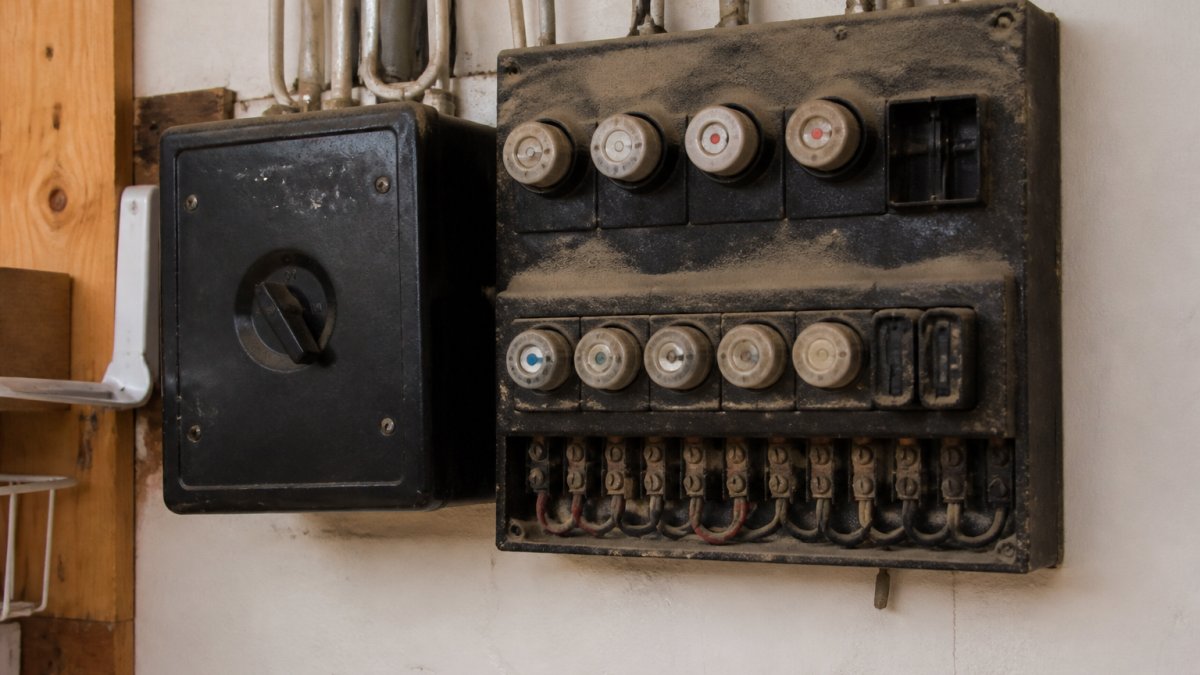
An outdated fuse box uses screw-in or cartridge fuses instead of circuit breakers. The problem is not age: fuses are easy to oversize, hard to inspect, and rarely matched to today's loads.
This guide from Hriczak Electrical Contracting LLC covers warning signs, the conversion process, upgrade paths, and cost drivers.
Electrical Safety Risks and Insurance Concerns
The most common failure point is not the fuse itself, but the fuse someone installed to stop it blowing.
A 15-amp circuit protected by a 30-amp fuse lets wiring overheat without tripping. According to the U.S. Fire Administration electrical fire data, electrical failures and malfunctions remain a leading cause of residential fires nationally.
Insurance adds pressure: many carriers ask about panel type during underwriting, and some decline coverage or attach conditions for fuse-based equipment.
Signs an Electrical Panel Needs Replacement
Replacement is warranted for physical damage, repeated fuse failures, or overheating evidence. Age alone is a factor, not a verdict.
Watch for these signals:
- Fuses blow repeatedly on the same circuit, even after load is reduced
- Scorch marks, melted insulation, or a burning smell near the panel
- Warm panel cover or discolored breakers during normal use
Any one justifies a professional inspection; two or more usually means the panel is at the end of its useful life.
Fuse Box to Circuit Breaker Conversion: What It Involves
A fuse box to circuit breaker conversion replaces the fuse panel with a modern breaker panel and, in most cases, the service equipment feeding it, more involved than swapping a box on a wall.
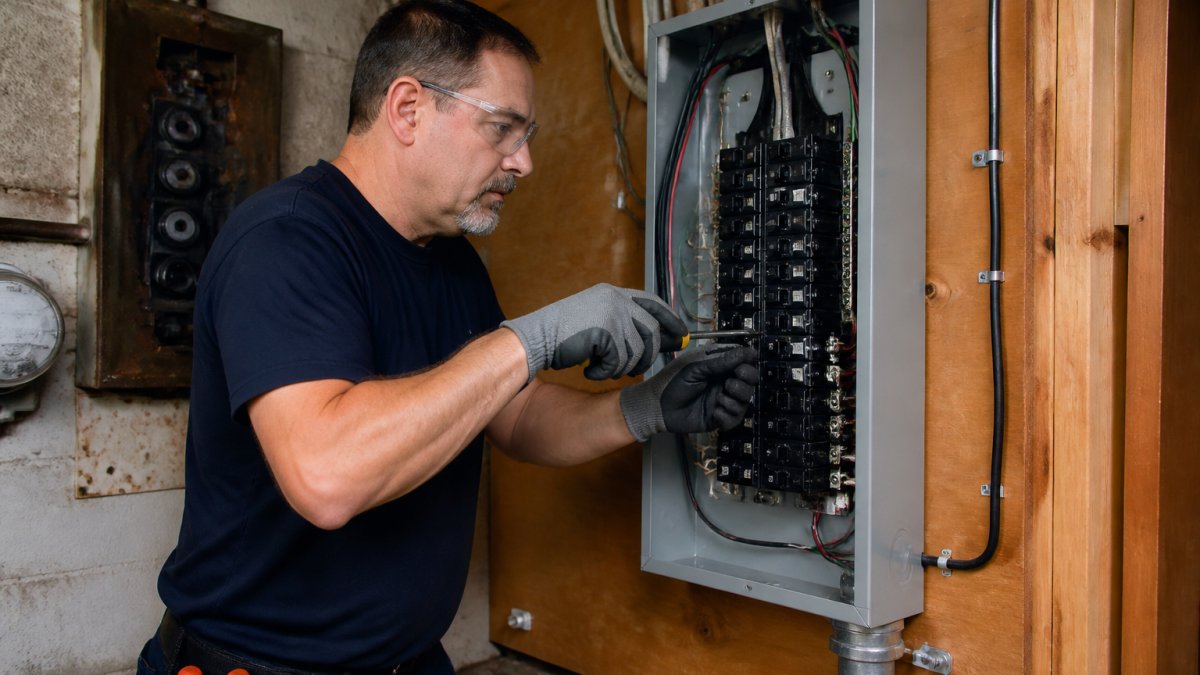
A typical conversion includes:
- Disconnect and permit - utility coordination and local permit filing
- Remove the old panel and inspect the wiring entering it
- Assess existing wiring for insulation condition, gauge, and grounding
- Install the new breaker panel and main disconnect
- Re-terminate every circuit and label it
- Ground and bond the system to current requirements
- Inspect and energize after the authority having jurisdiction signs off
Most conversions take one to two days on site; damaged wiring or an undersized service takes longer.
Wiring Compatibility and When Upgrades Are Needed
Existing wiring often works with a new panel. Knob-and-tube or degraded cloth-insulated wiring usually does not.
Aluminum branch circuits, brittle insulation, and missing equipment grounds most often force a partial rewire alongside the panel. A common mistake is assuming the panel swap fixes everything: a new panel protects the wiring you have, and if that wiring cannot safely carry the load, the panel just fails more reliably.
Alternative Upgrade Paths Beyond a Standard Breaker Panel
A standard breaker panel is not the only option, and not always the right one.
1. Repair the existing fuse system. The option competitors skip.
**2.
3. Service upgrade with a larger panel. Increases capacity, often from 100 amps to 200 amps.
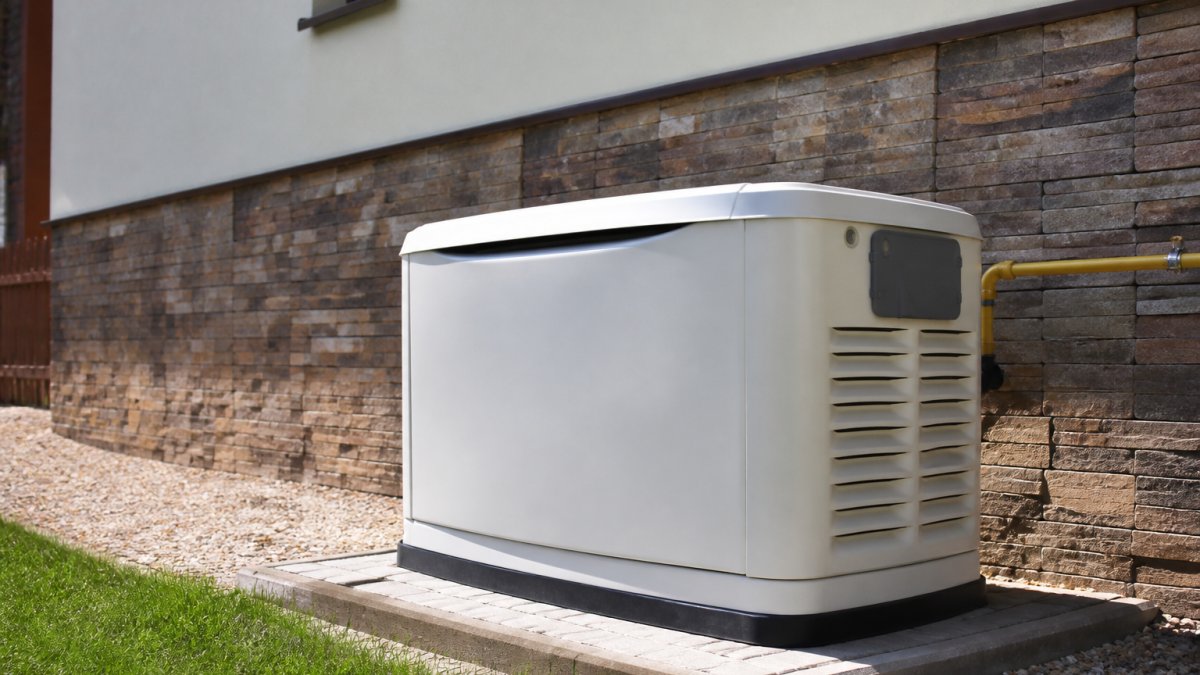
4. Smart electrical panel. Adds circuit-level monitoring and remote control. Suits homeowners planning solar, battery storage, or a standby generator.
| Option | What It Adds | Best For | Watch Out For |
|---|---|---|---|
| Repair existing fuse system | Corrected fuses, grounding, main disconnect | Sound wiring, no new demand, budget-limited | No added capacity; may not satisfy insurers |
| Standard breaker panel | Safe overcurrent protection, spare capacity | Sound wiring, routine upgrade | No load visibility |
| Service upgrade | Higher total capacity, new service entrance | EV chargers, heat pumps, additions | Utility coordination time |
| Smart electrical panel | Circuit monitoring, remote control | Solar, batteries, generators | Higher upfront cost |
A Decision Framework Based on the Home's Actual Condition
Age alone does not decide the path; inspection findings do. Use these questions in order:
- Is there evidence of overheating or damage? Scorch marks, melted insulation, a burning smell, or a warm cover mean the panel is done. Repair is off the table.
- Are the fuses correctly rated for their circuits? Oversized fuses, pennies behind fuses, or foil wraps mean the protection has already been defeated. Repair is off the table.
- Is the wiring sound? Knob-and-tube, brittle cloth insulation, or aluminum branch circuits usually force a partial rewire alongside any panel work.
- Has demand outgrown the service? If you are adding an EV charger, a heat pump, or a major addition, a like-for-like replacement will not be enough. Plan a service upgrade.
- Are you planning solar, storage, or backup power? If yes, a smart panel earns its cost. If no, it usually does not.
A panel that is old but serviceable, correctly fused, and matched to the home's load can sometimes be repaired; one with any warning sign above should be replaced. The inspection separates the two.
Modern Protection Features and Their Applicability
A new panel is an opportunity to add protection the old fuse box never had. Which features apply depends on the project and local code.
- AFCI protection detects the signature of a series or parallel arc and trips the circuit. It is commonly required on branch circuits serving bedrooms and living areas in new work, though requirements depend on the code edition your jurisdiction has adopted.
- GFCI protection detects a current imbalance and trips before a shock becomes lethal. It is commonly required in kitchens, bathrooms, garages, outdoors, and other wet locations.
- Whole-home surge protection clamps voltage spikes at the panel, protecting electronics from utility switching and nearby lightning. It is an add-on, not a code requirement in most cases.
Your electrician should confirm which features are required for your scope and which are optional upgrades under your local code edition.
Smart Electrical Panel for Home Use
A smart electrical panel is a breaker panel with built-in monitoring hardware and app-based controls. It tracks consumption per circuit and lets you manage loads remotely.
The practical value shows up in three places: identifying phantom loads that quietly raise your bill, prioritizing circuits during a generator or battery event, and giving an electrician real data instead of guesswork during troubleshooting.
Fuse Box Replacement Cost: What Drives the Estimate
Panel replacement cost depends on scope, not a flat rate, and two homes on the same street can land far apart. Below is a line-item breakdown of what goes into a quote, so you can compare bids on equal terms.
Typical cost ranges by scope (your local labor rates and permit fees will shift them):
- Like-for-like 100-amp breaker panel replacement: roughly $1,500 to $3,500. This assumes sound wiring, an intact service entrance, and a panel in an accessible location.
- 100-amp to 200-amp service upgrade: roughly $3,000 to $6,000. This adds a new meter base, service-entrance conductors, and utility coordination.
- Panel replacement plus partial rewiring: roughly $4,000 to $10,000 or more. Damaged branch circuits are the single biggest variable.
- Smart panel or advanced protection package: add roughly $1,000 to $3,000 on top of the base panel cost, depending on the hardware and the number of monitored circuits.
Line-item breakdown of a typical quote:
| Line Item | What It Covers | Share of the Bill |
|---|---|---|
| Panel and breakers | The enclosure, main breaker, and branch breakers | Materials |
| Labor | Electrician hours for removal, installation, and termination | Largest single line |
| Service entrance | Mast, meter base, and conductors if replaced | Often the second-largest line |
| Wiring repairs | Pigtailing, grounding, or replacing damaged circuits | Highly variable |
| Permits and inspection | Fees set by the local authority, not the contractor | Fixed by jurisdiction |
| Utility coordination | Disconnect and reconnect scheduling | Sometimes billed, sometimes not |
| Features | Surge protection, AFCI and GFCI breakers, smart monitoring | Optional add-ons |
What moves the number most:
- Amperage and panel size - a 200-amp service costs more than a like-for-like 100-amp replacement because the service entrance and meter base usually change too.
- Service entrance condition - a new mast, meter base, or underground feed adds labor and materials, and underground feeds can require trenching.
- Wiring condition - partial rewiring for damaged circuits is the biggest variable. A single bad circuit can add hundreds; a house full of brittle insulation can double the job.
- Permit and inspection fees - set by the local authority, not the contractor, and they vary widely from one jurisdiction to the next.
How to compare two quotes fairly: ask each contractor to break the bid into the line items above.
Because every home is different, we quote after inspecting the panel, the service entrance, and the branch circuits.
Permits, Code Compliance, and the Inspection Process
A panel replacement requires a permit in nearly every jurisdiction and must meet the locally adopted National Electrical Code. Skipping the permit is not a shortcut; it is a liability.
The process runs in a predictable order:
- Contractor files the permit with the local code office
- Utility disconnects power on the scheduled day
- Old panel removed, new panel and grounding installed
- Rough inspection by the authority having jurisdiction
- Corrections made if flagged
- Utility reconnects and the job is energized
- Final inspection and permit closed
The National Fire Protection Association overview of NFPA 70 publishes the code that most jurisdictions adopt, though local amendments vary.
Unpermitted work surfaces at resale. Inspectors find it, buyers walk, and you pay to redo it correctly.
Choosing a Licensed Electrician and What to Expect
Hire a licensed electrician with verifiable credentials and a clear scope of work.
At Hriczak Electrical Contracting LLC, we hold Philadelphia Master License #061283 and Bethlehem Master License #M-213, and we run 24-hour emergency service.
Expect a site visit before the quote, power off for most of a working day, and a rough inspection before the utility reconnects.
Hriczak Electrical Contracting LLC brings over 18 years of experience, licensed and certified electricians, and a customer-focused approach to every panel replacement and service upgrade.
Frequently Asked Questions
Are old-style fuse boxes still legal in homes?
Existing fuse boxes are often grandfathered under current codes, so they are not automatically illegal. However, local inspectors may flag them during a home sale or renovation, and insurance companies can refuse coverage or charge higher premiums. Many homeowners choose to replace outdated fuse boxes anyway because replacement parts are hard to find and Edison-base fuses can be easily swapped for the wrong rating, creating a fire risk.
How do I know if my fuse box needs to be replaced?
Warning signs include fuses that blow frequently, a fuse panel that feels warm or smells burnt, rust or scorch marks inside the box, and lights that dim when appliances start. If your home still relies on Edison-base fuses or has a 60-amp service, it likely cannot meet modern household demand. A licensed electrician can inspect the panel and confirm whether replacement or a full service upgrade is needed.
Can an electrician replace a fuse box with a circuit breaker panel?
Yes. A fuse box to circuit breaker conversion is a standard job for a licensed electrician. The process involves removing the old fuse panel, installing a new breaker box, and reconnecting existing circuits where the wiring is in good condition. If the home has older two-wire wiring without a ground, the electrician may recommend a wiring upgrade or GFCI protection to bring the system up to current safety standards.
What should I consider before upgrading an old fuse box?
Start by having a licensed electrician inspect the existing wiring, service capacity, and grounding. Ask whether a simple panel replacement is enough or if a service upgrade to 200 amps makes more sense for future loads like EV chargers or heat pumps. Also confirm permit requirements, request a written estimate that covers labor and materials, and verify the electrician carries the proper state and local licenses before work begins.