 How-to
How to Fix Flickering Lights in an Old House Safely
Last Updated: November 10, 2026
Quick Summary
Flickering lights in an old house usually trace back to a loose connection, a tired dimmer, or aging wiring, and the fix ranges from twisting in a bulb to calling a licensed electrician. Start with the safest, cheapest checks and stop the moment the problem points to wiring you cannot see. Loose neutral connections are the main cause in homes wired before 1980.
- Turn off the breaker and confirm the circuit is dead with a tester before touching any fixture.
- Swap an old dimmer for an LED-rated model when LED bulbs flicker or buzz.
- Whole-house flickering can signal a failing main connection and deserves a call, not a DIY fix.
- Stop using the circuit and call an electrician if you see buzzing, scorch marks, or a burning smell.
- Document intermittent flicker with which lights, what was running, and a short phone video.
Table of Contents
- Start With the Safest Checks Before You Touch Anything
- Why Are My Lights Flickering Even Though the Bulbs Are Fine?
- Old-House Wiring Types and the Risks They Carry
- Multiple Lights Flickering in House: What the Pattern Tells You
- How to Fix Flickering Lights in an Old House DIY: A Step-by-Step Path
- When Should I Be Worried About Lights Flickering in My House?
- Book an Old-House Electrical Inspection With Hriczak
- Frequently Asked Questions
Start With the Safest Checks Before You Touch Anything
Flickering lights in an old house usually trace back to a loose connection, a tired dimmer, or aging wiring, and the fix ranges from twisting in a bulb to calling a licensed electrician.
Here is the part most guides skip: the order of your checks matters more than the checks themselves. Start with the safest, cheapest fixes.
Electricity kills. If you are not comfortable turning off a breaker, do not open anything. Call a pro.
Turn Off the Circuit and Confirm It's Dead
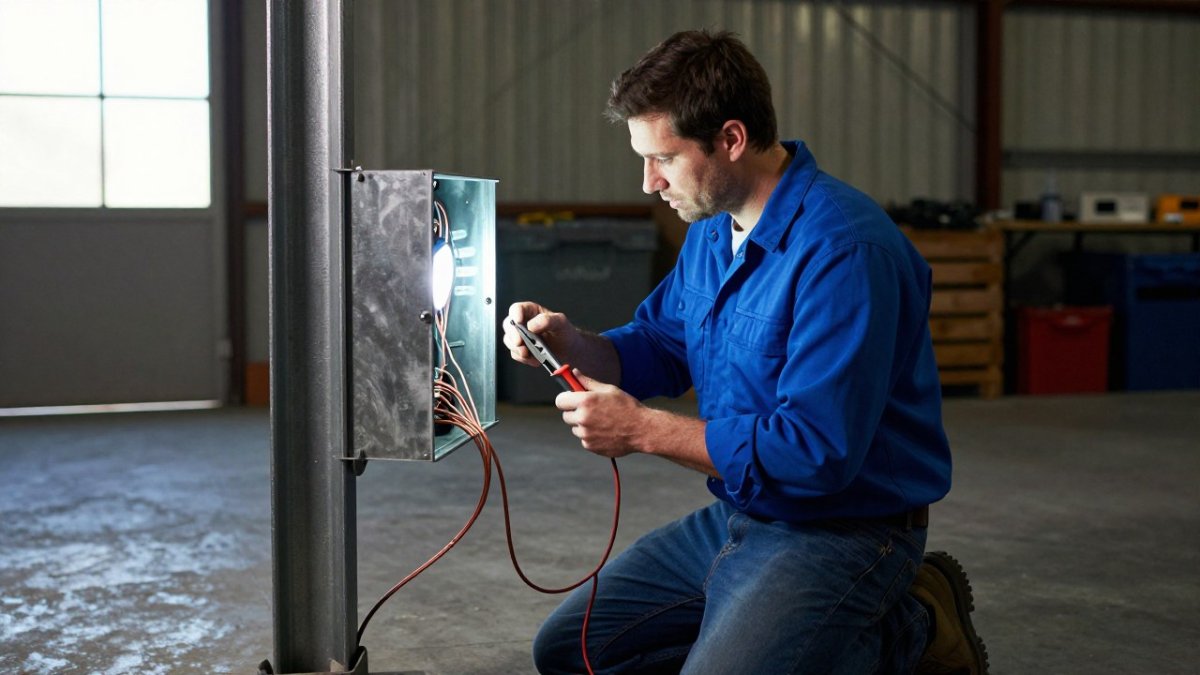
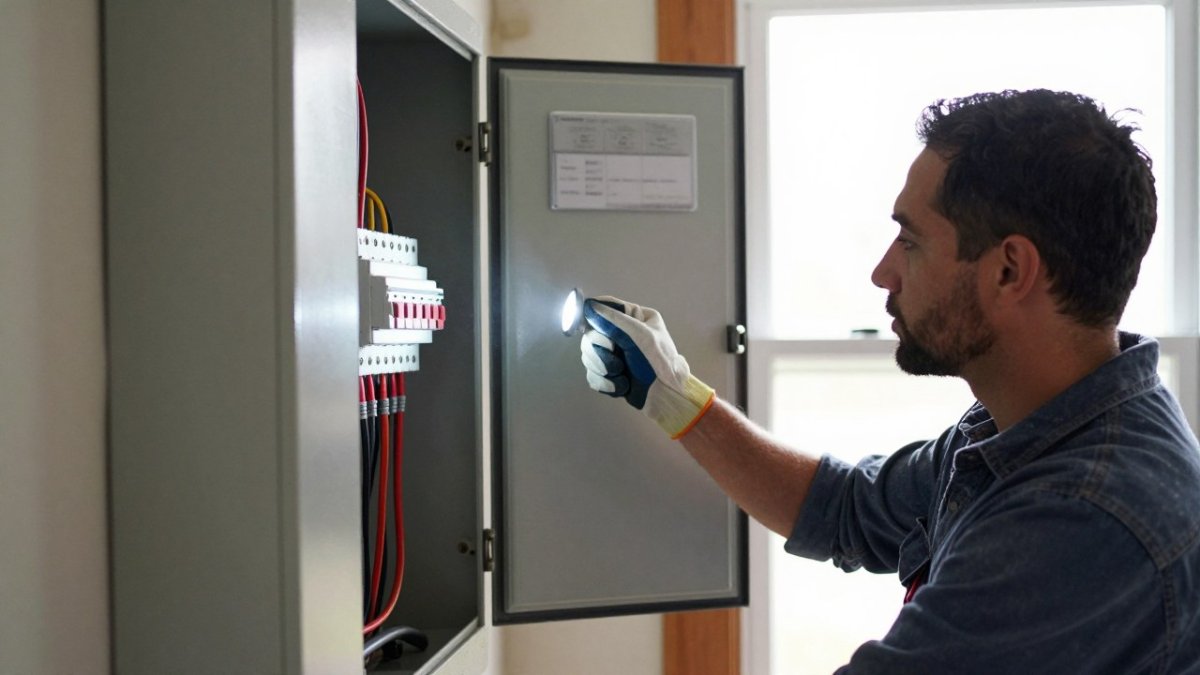
Before you touch a bulb, a switch, or a socket, cut the power and prove it is off. This is not optional.
Here is the safe sequence:
- Flip the breaker for that room to OFF
- Tell everyone in the house what you are doing
- Use a non-contact voltage tester on the fixture
A common mistake is trusting the wall switch alone. Old switches fail. The breaker is the real cutoff.
Why Are My Lights Flickering Even Though the Bulbs Are Fine?
Lights flicker with good bulbs because the problem lives behind the bulb: a poor connection, a mismatched dimmer, or a circuit carrying more load than it should.
According to diagnostic guidance for older electrical systems, loose neutral connections are the main cause of flickering lights in homes wired before 1980. That single fact changes how you should troubleshoot an old house.
Loose Bulbs, Corroded Sockets, and Poor Contact
Start here because it is free and safe. A loose bulb or a corroded socket creates poor electrical contact, and that contact flickers.
Check these in order:
- Loose bulb: twist it snug, not tight enough to crack the glass
- Corroded socket: look for green or white crust on the metal tab
- Bent socket tab: gently lift the center tab so it meets the bulb base
- Wrong bulb wattage: match the fixture's rating
If the socket is corroded or cracked, replace the fixture. Do not scrape at it with the power on.
LED Bulbs and Incompatible Dimmer Switches
Modern LED bulbs draw far less power than the dimmer switch was built to handle.
Per electrical industry guidance on LED and dimmer compatibility, this mismatch is one of the most common flicker complaints in older homes.
The fix is simple. Swap the dimmer for one rated for LED bulbs, or use dimmable LEDs that match your dimmer's minimum load.
Old-House Wiring Types and the Risks They Carry
Older homes carry wiring that was never designed for today's electrical load, and the wiring type behind your walls tells you how seriously to treat a flicker.
| Wiring Type | Typical Era | Why It Flickers | Observable Clues | What to Do |
|---|---|---|---|---|
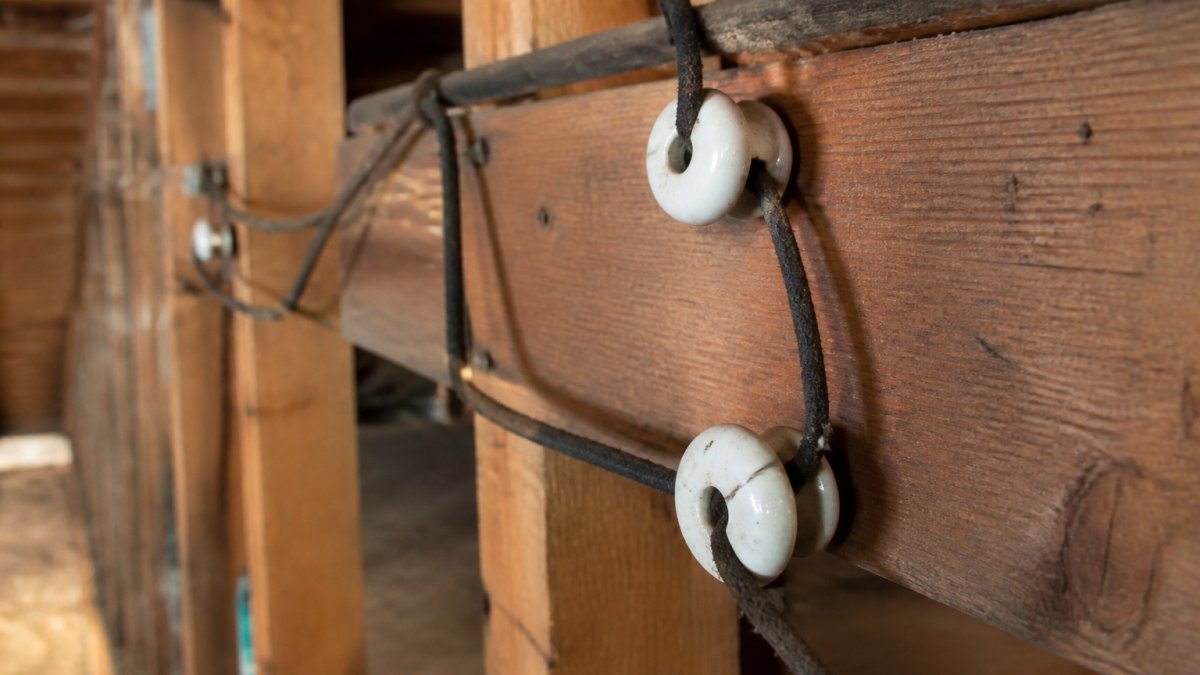
| Knob and tube | Pre-1950 | Worn, brittle insulation and soldered or twisted splices that loosen with heat cycles | Ceramic knobs or tubes in the basement or attic, cloth-covered wires, no ground wire at outlets | Do not disturb it; plan replacement, and never bury it in insulation |
| Aluminum branch wiring | 1965-1973 | Aluminum expands and contracts more than copper, so terminals loosen and heat up | Silver-colored wire at devices, flicker that worsens when a circuit heats up, warm cover plates | Have every connection evaluated by an electrician; do not re-terminate it yourself |
| Cloth-wrapped cable | 1930s-1950s | Insulation dries out and cracks, exposing conductors that can arc | Crumbling cloth wrap, brittle wire ends, a faint burning smell near boxes | Inspect and plan replacement; stop using any circuit with cracked insulation |
| Early plastic-sheathed cable | 1960s-1970s | Undersized neutrals and back-stabbed outlets that loosen over decades | Flicker at outlets when a plug is wiggled, warm receptacle faces | Check connections and replace back-stabbed devices with screw terminals |
| Modern Romex | 1980s on | Usually a loose device or overload rather than the cable itself | Flicker tied to one fixture or one appliance | Standard checks: bulb, socket, dimmer, circuit load |
Two mechanisms drive most old-house flicker. First, worn insulation lets conductors arc or leak current, which shows up as a flicker that comes and goes with vibration or heat. Second, loose connections at splices, devices, and panel terminals create resistance; resistance makes heat, and heat makes the connection looser.
A common pattern in pre-1950 homes is a flicker that appears only when a specific circuit carries a heavy load, such as a space heater or a window air conditioner.
When an electrician inspects an old house, expect them to open a sample of boxes, check panel terminations, look for aluminum wiring and back-stabbed devices, and test for voltage drop under load.
If you want to know how to identify outdated wiring in old homes, we break down the visual clues room by room. And if you have an old fuse box, our guide to alternatives to outdated fuse boxes for homes covers your replacement options.
Multiple Lights Flickering in House: What the Pattern Tells You
Multiple lights flickering in a house points to a shared problem upstream, while one flickering light usually means a local issue at that fixture. The pattern is your best diagnostic clue.
Single-Light vs. Whole-House Flickering
Read the pattern before you grab a screwdriver:
- One light flickers: bulb, socket, or that fixture's wiring
- Several lights on one circuit flicker: a loose connection on that circuit
- Whole-house flickering: main panel, service entrance, or utility supply
- Flicker when a big appliance kicks on: overloaded circuit or loose neutral
Whole-house flickering deserves a call, not a DIY fix. It can signal a failing main connection, which is a fire risk.
How to Fix Flickering Lights in an Old House DIY: A Step-by-Step Path
This is the safe DIY path for how to fix flickering lights in an old house. Work top to bottom and stop when a step points to wiring you cannot see.
- Turn off the breaker and confirm the circuit is dead with a tester.
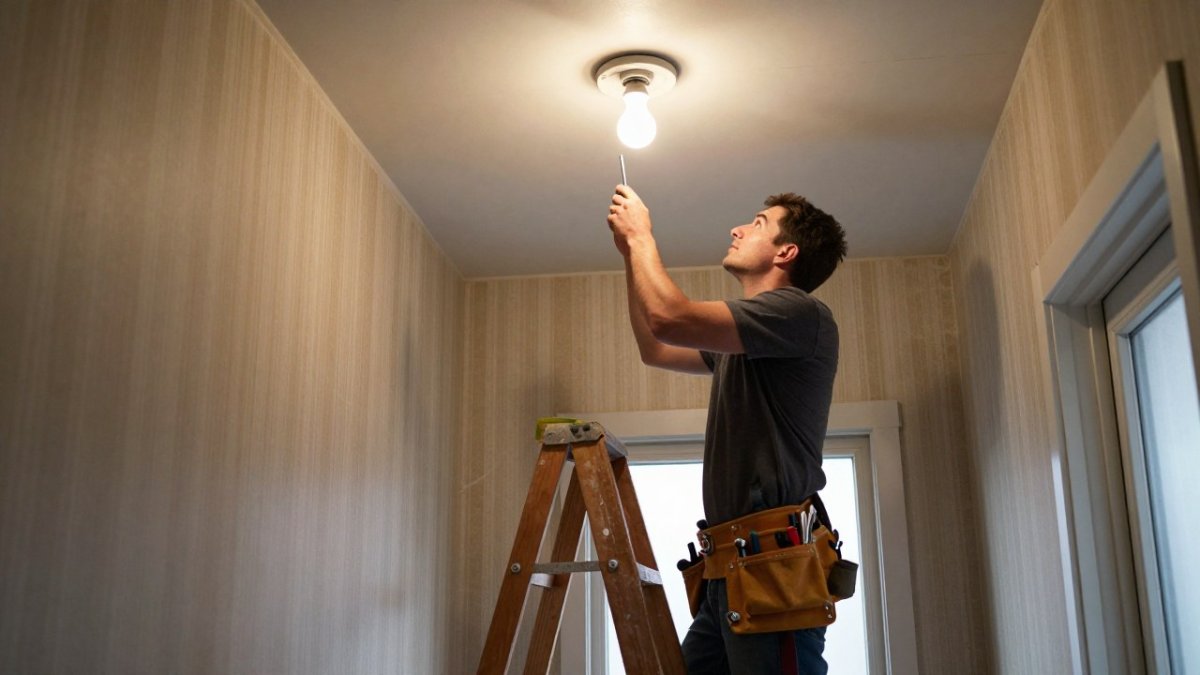
- Tighten or replace the bulb. Check for corrosion in the socket.
- Test the dimmer. If it is old and the bulb is LED, replace the dimmer with an LED-rated model.
- Check the fixture connections. With power off, look for loose wire nuts or scorched wire ends.
- Map the circuit. Note which outlets and lights share the flickering circuit.
- Unplug heavy loads from that circuit and retest. If the flicker stops, the circuit is overloaded.
- Check the panel for a warm breaker or scorch marks. If you find either, stop and call an electrician.
- Call a licensed electrician if the flicker continues, comes from multiple rooms, or returns after fixes.
A safe boundary matters here. Tightening a bulb and swapping a dimmer are fine for most homeowners. Opening a panel, splicing wiring, or chasing a loose neutral is not.
Document the Intermittent Flickering Before You Call Anyone
Intermittent flickering is hard to catch, so document it. A short log saves the electrician hours and you money.
Record these details:
- Which lights flicker and which room they are in
- What you were doing when it happened, such as running the dryer
- Time of day and how long it lasted
- A short phone video of the flicker
That record helps a pro trace the fault fast. It also proves the problem is real if it hides during the visit.
When Should I Be Worried About Lights Flickering in My House?
You should be worried when flickering comes with buzzing, a burning smell, scorch marks, a warm switch or panel cover, sparks, or a breaker that trips repeatedly.
Use this sequence if you see or smell any of those signs:
- Stop using the circuit. Turn off the breaker for that circuit if you can reach it safely without touching a hot panel cover.
- Do not reset a breaker that trips again. A breaker that trips twice is telling you there is a fault, not a nuisance.
- Leave the area if you smell burning or see smoke, and call 911 if there is fire or smoke you cannot control.
- Call a licensed electrician for burning smells, hot covers, buzzing, sparks, or repeated trips, even if the flicker stops.
- Do not open the panel to look for the problem. Panel work is not a homeowner task.
Voltage checks do not settle it. As noted in electrician discussion on flickering causes, voltage can read normal while a loose connection still causes flicker inside the walls.
Whole-house flickering deserves its own call.
Intermittent flicker is hard to catch, so document it before the visit.
One homeowner in Rogers, AR lived with flickering for four years. The cause was improper wiring, and it took a proper repair to finally resolve it, according to a local homeowner account shared in a neighborhood group.
If you are weighing a repair against a rewire, our breakdown of the cost to replace old electrical wiring in 2026 helps you plan before you call.
Book an Old-House Electrical Inspection With Hriczak
An old-house inspection finds the loose connections and worn wiring behind flickering lights before they become a fire. Our licensed electricians work to trace the fault and explain your options.
Here is what you get with us:
- Licensed, certified electricians on our team
- 24-hour emergency service for electrical emergencies
- Over 18 years of industry experience
- Personalized recommendations tailored to your budget and needs
Before you book, our guide on hiring a trusted electrician walks you through the questions to ask.
Flickering lights in an old house are a warning, not a quirk. Start with the safe checks, document what you find, and call a pro the moment the trail leads into the panel or the walls.
Frequently Asked Questions
Why are the lights in my old house flickering?
In homes wired before 1980, loose neutral connections are the most common cause of flickering lights, . Other frequent culprits include loose or improperly seated bulbs, corroded sockets, incompatible LED bulbs paired with legacy dimmer switches, overloaded circuits, and worn wiring. The pattern matters: a single flickering fixture usually points to a bulb or socket problem, while flickering across several rooms suggests a circuit, panel, or neutral issue that deserves a licensed electrician's inspection.
Why are my lights flickering even though the bulbs are fine?
A good bulb can still flicker when the connection around it fails. Check for a loose bulb that isn't fully seated, a corroded or worn socket creating poor electrical contact, or a dimmer switch that can't regulate the low power draw of a modern LED bulb. Older dimmers often cause this problem. If those check out, the cause is further back in the circuit, such as a loose wiring connection at the fixture or in the panel.
When should I be worried about lights flickering in my house?
Treat flickering as urgent when it comes with buzzing, a burning smell, scorch marks, or lights that dim and brighten across the whole house at once. Flickering lights can be a sign of a real electrical issue. Even when your utility company confirms voltage is within normal parameters, internal wiring faults and loose connections can still cause persistent flickering, so a professional inspection is the safe next step.
Can I fix flickering lights in an old house myself?
You can safely handle the simple fixes: turn off the circuit, let the bulb cool, reseat or replace it, and tighten a loose fixture. Beyond that, stop. Opening a panel, chasing loose neutrals, or repairing worn wiring in a pre-1980 home belongs to a licensed electrician. Document when the flickering happens and call a professional rather than guessing inside an aging system.