 comparison
Are AFCI Breakers Worth the Installation Cost?
Last Updated: October 25, 2026
Quick Summary
An AFCI breaker is worth the installation cost because it detects dangerous arc faults that standard breakers miss and cuts power before a fire starts. Professional AFCI breaker installation runs roughly $111 to $219 per unit, while the breaker itself typically retails for $40 to $60.
- An AFCI breaker carries sensing circuitry a standard breaker lacks, which explains the price gap.
- Published installed figures bundle device cost, diagnostic time, labor, permit fees, and possible panel remediation.
- AFCI protection targets arc faults that cause fires, while GFCI protection targets ground faults that cause shocks.
- The NEC requires AFCI protection on most 120-volt, 15- and 20-amp branch circuits in dwellings.
- Nuisance tripping is usually a wiring problem the AFCI is correctly reporting, not a faulty breaker.
Table of Contents
- What an AFCI Breaker Does and Why It Costs More
- AFCI Breaker Installation Cost: Breaker Price Plus Labor
- AFCI vs. GFCI Breaker: Different Protection, Different Price
- AFCI Breaker Code Requirements: Where Protection Is Mandated
- AFCI Breaker Nuisance Tripping: Causes and Fixes
- The Benefits: Fire Prevention Weighed Against the Cost
- Where AFCI Protection Makes Sense and Where It Does Not
- Schedule an AFCI Evaluation for Your Panel
- Frequently Asked Questions
What an AFCI Breaker Does and Why It Costs More
An arc fault circuit interrupter is a breaker that watches a circuit for the signature of a dangerous electrical arc and cuts power before that arc can start a fire.
At Hriczak Electrical Contracting LLC, we install and troubleshoot these devices, and the question we hear most is whether the protection justifies the spend.
An arc fault is an unintended arc caused by current flowing through an unplanned path, and arcing creates high-intensity heating at the arc point, according to AFCI Safety's explanation of arc faults.
Two arc types matter. A parallel arc jumps between conductors and draws heavy current. A series arc forms in a single damaged conductor and draws less current than a standard breaker's trip threshold, which is exactly why it can smolder undetected.
AFCI Breaker Installation Cost: Breaker Price Plus Labor
Professional AFCI breaker installation runs roughly $111 to $219 per unit, while the breaker itself typically retails for $40 to $60, according to Empire Electric's homeowner cost guide. Those are market estimates, not a quote for your panel, because the real number depends on what the electrician finds once the cover comes off.
What the Installed Price Actually Includes
Most published "installed" figures bundle several line items. Breaking them apart is the only way to compare quotes fairly:
- Device cost: the AFCI breaker itself, typically $40 to $60 for a single-pole unit, more for two-pole or dual-function models.
- Diagnostic time: tracing the circuit, checking for shared neutrals, and confirming the panel can accept the breaker, often 15 to 45 minutes, and frequently the line item homeowners do not expect.
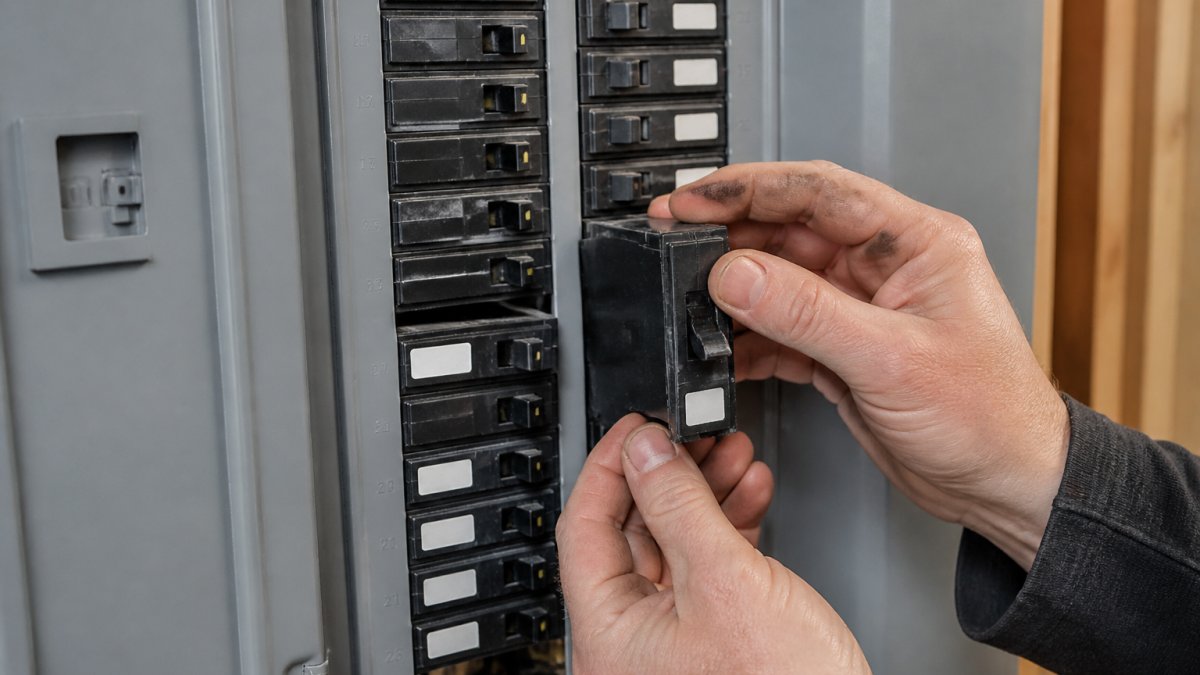
- Labor for the swap: removing the old breaker, landing the new one, torquing terminations, and testing. A clean single-pole swap is usually under an hour.
A quote listing only "breaker plus labor" hides the diagnostic and permit lines, where budget surprises come from.
Breaker Price Versus Installed Price
The device is the cheap part. Labor, diagnostics, and panel access drive the installed figure. Published estimates also vary widely by scope: AFCI Safety lists an average breaker cost of about $49, while other sources cite combination breakers at $25 to $50 each. None of those figures include the electrician's time.
Scenario-Based Project Totals
Four common projects land in very different places. The totals below are planning ranges, not quotes, and assume a licensed electrician and a panel that can accept the device:
| Scenario | What It Involves | Typical Planning Range |
|---|---|---|
| Single-breaker replacement | One open slot, compatible panel, no wiring issues | Low end of the per-unit installed range |
| Multiple-circuit retrofit | Several AFCI breakers added in one visit; labor per breaker drops because the panel is already open | Per-unit cost falls as count rises; total scales with circuit count |
| New circuit plus AFCI | Running new cable, adding the breaker, testing | Device cost plus a new-circuit labor allowance |
| Panel replacement with AFCI | New panel, AFCI breakers throughout, permit and inspection | Highest total; AFCI cost is a fraction of the panel job |
The pattern to internalize: the breaker is a small fraction of any project, and the labor and remediation around it set the total. Compare scope lines, not device price.
What Adds to a Real Project Total
A straightforward swap in a modern panel with open spaces stays near the low end. Complications push it up:
- Full panel: no open slots means a tandem breaker or a subpanel before any AFCI goes in.
- Incompatible panel brand: some panels accept only the manufacturer's own AFCI breakers, which cost more.
- Shared neutral wiring: multiwire branch circuits need careful handling or a two-pole AFCI.
If your home still runs on a fuse box, the math changes entirely; our guide to alternatives to outdated fuse boxes covers a sensible upgrade path. Homes with aging conductors may also need to budget for replacing old electrical wiring, since AFCI protection cannot compensate for wire that is already failing.
AFCI vs. GFCI Breaker: Different Protection, Different Price
AFCI and GFCI breakers solve different problems, and neither replaces the other. AFCI protection targets arc faults that cause electrical fires. GFCI protection targets ground faults that cause shocks, when current leaks through a person or through water.
A standard GFCI breaker typically costs less than an AFCI breaker because its sensing circuit is simpler. Where the two overlap is in rooms that need both: kitchens, laundry areas, bathrooms, and garages.
Dual-Function Breakers and What They Cost
A dual-function AFCI/GFCI breaker combines both protections in one device. You pay a premium over either single-function breaker but save panel space and avoid stacking two devices on one circuit.
The trade-off is diagnostic. When a dual-function breaker trips, you have to determine whether it saw an arc or a ground fault, and that takes a little more troubleshooting than a single-function device.
| Protection Type | What It Detects | Typical Device Cost | Best For |
|---|---|---|---|
| Standard breaker | Overload, short circuit | Lowest | Circuits with no AFCI or GFCI requirement |
| AFCI breaker | Series and parallel arcs | $25-$60 | Bedrooms, living areas, general branch circuits |
| GFCI breaker | Ground faults, shock risk | Moderate | Kitchens, baths, outdoors, garages |
| Dual-function AFCI/GFCI | Arcs and ground faults | Highest | Remodels needing both in one slot |
AFCI Breaker Code Requirements: Where Protection Is Mandated
The National Electrical Code requires AFCI protection on most 120-volt, 15- and 20-amp branch circuits in dwellings, and the requirement has expanded with each code cycle.
What actually governs your project is the edition your local authority has adopted and how strictly it is enforced. Our breakdown of local electrical code compliance and inspection requirements explains how to confirm which edition applies before you buy anything.
Why "The Code" Is Not One Answer
The NEC is a model code; it has no force until a state or local jurisdiction adopts a specific edition, often with amendments. That produces three practical realities:
- Edition lag: a jurisdiction may be enforcing an edition several cycles behind the current one, so a requirement you read about online may not yet apply where you live.
- Local amendments: some jurisdictions add requirements, and some carve out exceptions, so the same circuit can be treated differently two towns over.
- Enforcement style: two inspectors applying the same edition can read a gray area differently, so the pre-inspection conversation matters as much as the code text.
The reliable move is to ask the authority having jurisdiction which edition is enforced and whether any local amendments touch AFCI, then get that answer before buying devices.
New Construction, Renovation, and Existing-Home Work
The code treats these three project types very differently, and conflating them is the most common source of homeowner confusion:
- New construction: the simplest case. AFCI goes in everywhere the adopted edition requires, and the inspection checks it.
- Renovation or circuit extension: extending or modifying an existing circuit can trigger AFCI requirements for that circuit, and some jurisdictions require AFCI on any circuit an electrician modifies. Others limit it to new branch circuits only.
- Existing-home retrofit: adding AFCI protection to a finished house with no other permitted work is optional in most places. It becomes mandatory when you pull a permit for related work that the adopted edition covers.
Retrofit, Renovation, and Jurisdiction Differences
Before planning a retrofit, identify outdated wiring in old homes: aluminum branch wiring or knob-and-tube changes the scope completely, and sometimes changes whether AFCI protection can be installed at all without remediation first.
The practical sequence: confirm the enforced edition, confirm whether your project triggers a permit, confirm the panel can accept the device, then price the work. Skipping the first two steps is how homeowners buy breakers they cannot legally install yet.
AFCI Breaker Nuisance Tripping: Causes and Fixes
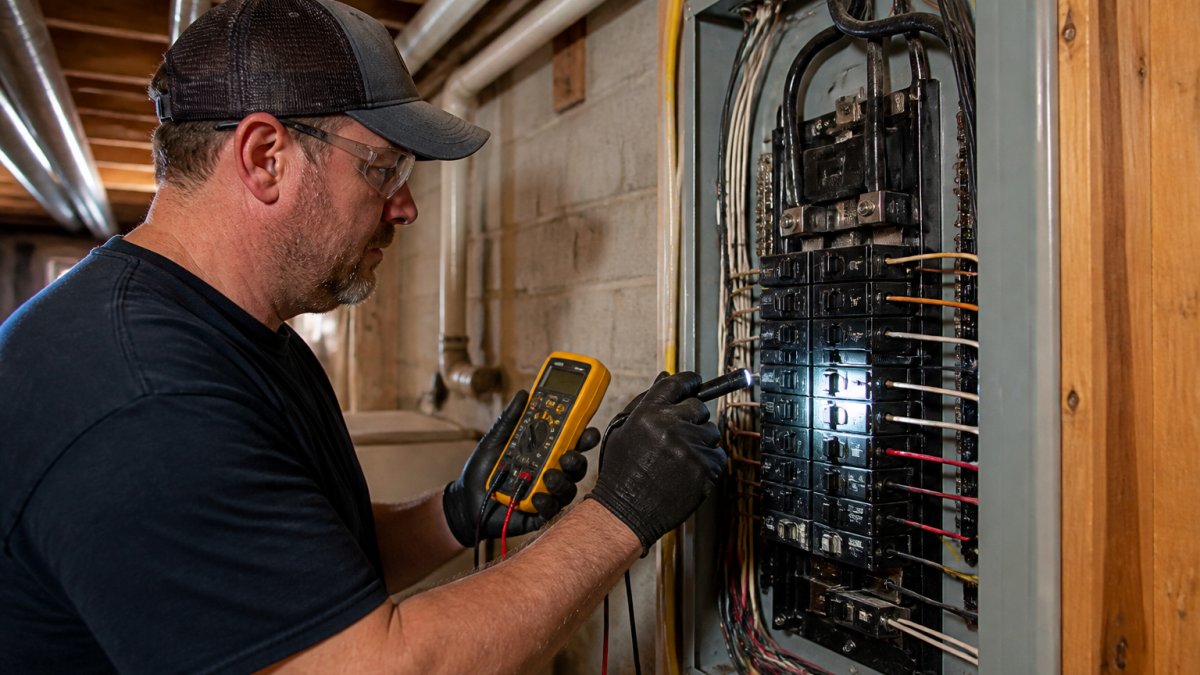
Nuisance tripping is the most common complaint after installation, and it is usually a wiring problem the AFCI is correctly reporting rather than a faulty breaker.
The usual culprits:
- Shared neutrals on multiwire circuits, which trip a single-pole AFCI.
- Loose connections at receptacles and backstabbed outlets.
- Damaged cords on appliances, vacuums, or tools.
Diagnostic work means isolating the circuit, checking terminations, and testing appliances one at a time.
Watch out: swapping a tripping AFCI for a standard breaker to "fix" the problem removes the protection and leaves the actual fault in the wall.
The Benefits: Fire Prevention Weighed Against the Cost
The benefit case is straightforward: arc fault protection catches a failure mode standard breakers miss, and electrical fires often start inside walls where nobody sees them until the smoke appears.
The honest version is more nuanced. A U.S. Consumer Product Safety Commission analysis of AFCI replacements modeled benefits over a 30-to-40-year period for new housing and found that, under the scenario summarized, benefits could run $92 to $104 less than costs.
Where the math improves is in older housing stock with aging wiring, where the baseline fire risk is higher.
Where AFCI Protection Makes Sense and Where It Does Not
AFCI protection makes sense on any branch circuit feeding living space in an older home, on every circuit added during a renovation, and on circuits serving bedrooms and sleeping areas in any dwelling.
It makes less sense in a few situations.
The practical rule we use: protect the circuits people sleep near and the circuits with the oldest wiring first. Those two categories carry most of the risk.
Schedule an AFCI Evaluation for Your Panel
Panel work is not a place for guesswork, and the difference between a clean install and a callback is usually the diagnosis before anyone touches a breaker.
We quote the work before we start it. If you want to know what your panel actually needs, hire a licensed electrician who will walk the panel with you and put the findings in writing.
Frequently Asked Questions
How much does AFCI breaker installation cost?
Published estimates put professional AFCI breaker installation at roughly $111 to $219 per unit, with the breaker itself retailing around $40 to $60. That range covers the device and basic labor, but it does not account for panel capacity limits, wiring repairs, or permit fees. Homes with crowded panels or shared neutrals often need diagnostic work first. Because every panel is different, ask for an itemized quote that separates the breaker, labor, and any panel work.
What is the difference between an AFCI and a GFCI breaker?
An AFCI breaker detects dangerous arcing in wiring and cords and interrupts the circuit to prevent electrical fires. A GFCI breaker protects people from shock by sensing current leaking to ground, which is why it is required near water. The two solve different problems, so a kitchen or bathroom circuit may need both. Dual-function breakers combine arc fault and shock protection in one device, which can simplify a panel but usually costs more per unit than a single-purpose breaker.
Are AFCI breakers required by code?
The National Electrical Code requires AFCI protection on most branch circuits in new construction, and the requirement has expanded with each code cycle to cover more rooms. Local jurisdictions adopt and amend the code on their own schedule, so what applies in one township may differ from the next. Renovations and circuit extensions often trigger the requirement for the affected circuits. A licensed electrician can confirm which edition your area enforces before any work begins.
Can an AFCI breaker trip without a dangerous arc fault?
Yes. Nuisance tripping is a known issue, and it usually traces to a real wiring condition rather than a faulty breaker. Shared neutrals, damaged insulation, loose connections, and older appliances with brushed motors can all cause trips. Before replacing the breaker, an electrician should test the circuit and inspect connections. Fixing the underlying wiring problem is often cheaper than repeated service calls, and it keeps the protection working as intended.
Arc fault protection is one of those upgrades that is easy to defer until something goes wrong. If your panel is old, your wiring is a question mark, or you are planning a renovation that adds circuits, get the evaluation done first and let the findings drive the scope. Get started with Hriczak Electrical Contracting LLC and put a licensed electrician on your panel before the next breaker trips.