 How-to
7 Reasons Electrical Fire Prevention Is Critical for Old Homes
Last Updated: November 4, 2026
Quick Summary
Electrical fire prevention is critical for old homes because wiring installed decades ago was never built for today's appliances, chargers, and heat pumps, and most old-home fires start where you cannot see them, inside walls and panels. Nearly 50,000 homes face electrical fires every year, causing about $1.3 billion in property losses annually.
- Aging wiring rarely acts alone; overloaded circuits, loose connections, damaged insulation, and outdated panels drive old-home fires.
- Treat flickering lights, warm outlets, burning smells, repeated breaker trips, or buzzing as reasons to call an electrician.
- Schedule an inspection if the home is over 40 years old with no documented electrical review, or over 60 regardless.
- Rank upgrades by risk: fix loose connections and damaged insulation at accessible points first.
- Temporary measures like unplugging a warm outlet reduce risk today but do not repair the underlying wiring.
Table of Contents
- Why Electrical Fire Prevention Is Critical for Old Homes
- Common Causes of Electrical Fires in Aging Houses
- Warning Signs of Faulty Wiring You Should Never Ignore
- Outdated Wiring Types: Knob-and-Tube, Aluminum, and Fuse Boxes
- How to Prevent Electrical Fires at Home: A Room-by-Room Checklist
- What an Old Home Electrical Inspection Covers and When to Schedule One
- Prioritizing Upgrades When a Full Rewire Is Not Feasible
- Schedule Your Electrical Safety Inspection with Hriczak
- Frequently Asked Questions
Why Electrical Fire Prevention Is Critical for Old Homes
Nearly 50,000 homes face electrical fires every year, and those fires cause about $1.3 billion in property losses annually, according to Ting's home electrical fire prevention research. Older houses carry much of that risk. Wiring installed decades ago was never built for today's appliances, chargers, and heat pumps.
At Hriczak Electrical Contracting LLC, we have over 18 years of experience in electrical work. This guide explains why electrical fire prevention matters so much in old homes, what to check, and when to call a licensed electrician.
The short version: most old-home fires start where you cannot see them, inside walls and panels. Prevention means finding those spots before they ignite.
Common Causes of Electrical Fires in Aging Houses
Aging wiring tops the list, but it rarely acts alone. Four problems show up again and again in older homes:
- Overloaded circuits. Modern electrical demand outpaces what old circuits can carry.
- Loose connections. Screws back out and wires loosen over decades, creating heat.
- Damaged insulation. Heat, rodents, and time crack the coating around wires.
- Outdated panels and fuse boxes. These were sized for far fewer appliances.
Each one builds heat quietly. A loose connection can smolder for months before it becomes a fire.
Warning Signs of Faulty Wiring You Should Never Ignore
Watch for these warning signs of faulty wiring, and treat any one of them as a reason to call an electrician:
- Flickering lights when appliances turn on
- Outlets that feel warm or look discolored
- A burning smell with no visible source
- Breakers that trip repeatedly
- Buzzing or crackling sounds at outlets and switches
- Frayed wire or exposed wiring near outlets
- Two-prong outlets with no grounding
Any single sign deserves a professional look. Two or more together mean you should stop using that circuit until it is checked. For a closer look at aging wire itself, our guide on how to identify outdated wiring in old homes walks through what to inspect.
Outdated Wiring Types: Knob-and-Tube, Aluminum, and Fuse Boxes
Three legacy systems cause most old-home electrical trouble.
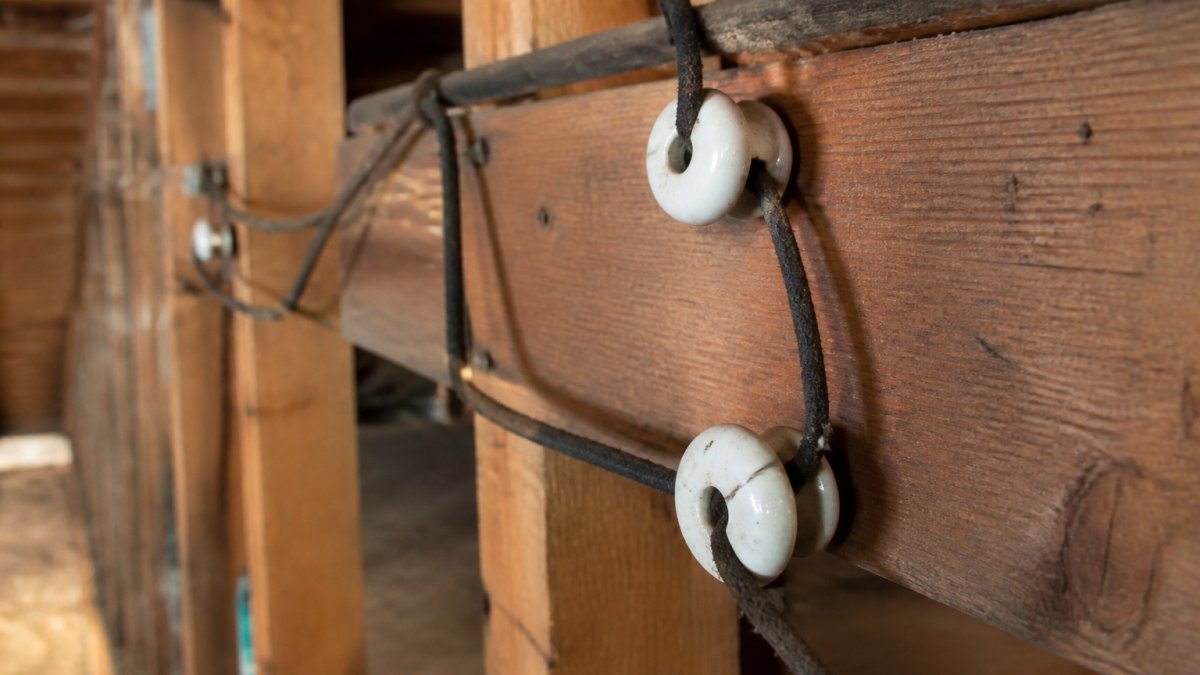
Knob-and-tube wiring runs through ceramic knobs in attics and walls. The insulation on these wires becomes brittle with age, and loose connections are common.
Aluminum wiring, common in homes built in the 1960s and 1970s, expands and contracts more than copper. That movement loosens connections and creates shock and fire hazards.
Fuse boxes predate modern circuit breakers. Homeowners sometimes install oversized fuses to stop blowing, which removes the safety limit entirely.
If your home has any of these, an upgrade is worth planning. Our article on alternatives to outdated fuse boxes covers the replacement options.
How to Prevent Electrical Fires at Home: A Room-by-Room Checklist
Here is how to prevent electrical fires at home, room by room. This checklist takes about 20 minutes and needs no tools.
Kitchen
- Keep the space heater and toaster on separate circuits
- Check that outlets near the sink have GFCI protection
- Look for cracked cords on small appliances
Living room and bedrooms
- Replace any extension cord used as permanent wiring
- Keep space heaters at least 1 meter from curtains and furniture
- Confirm smoke alarms work on every level
Basement and garage
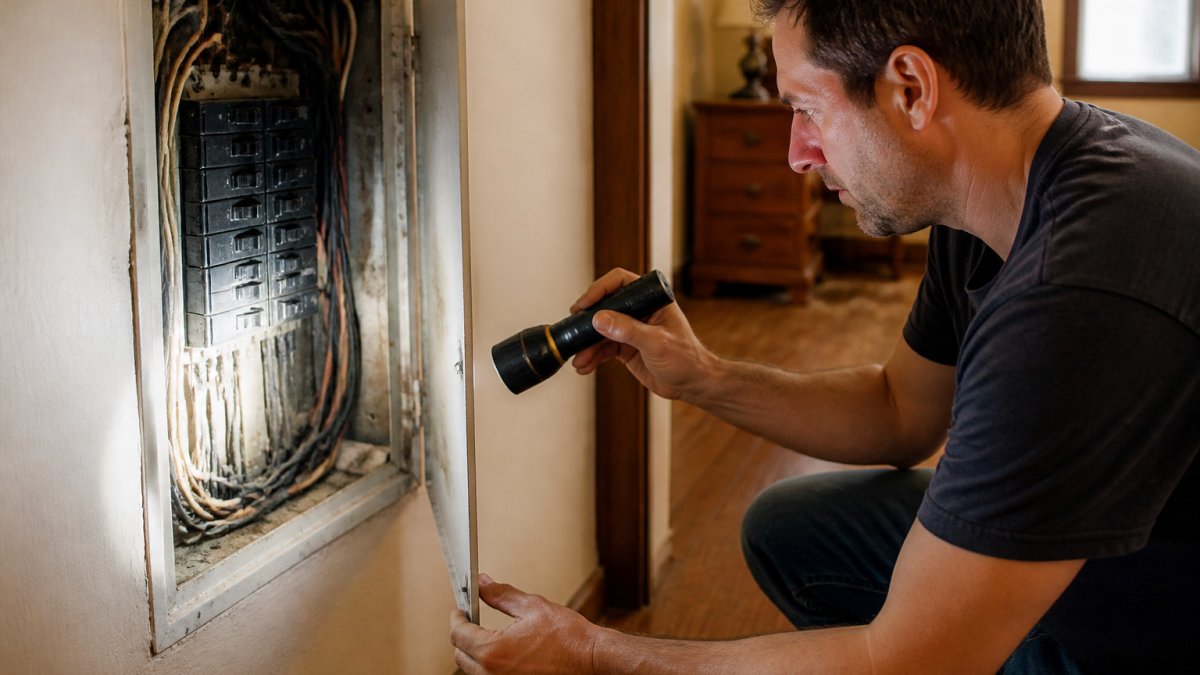
- Look for scorch marks or a burning smell near the panel
- Check for exposed wiring along the joists
- Make sure the panel door closes and no breaker feels hot
What you can safely check: outlets, cords, alarms, and visible damage. What needs an electrician: anything inside the panel, behind walls, or involving a warm outlet. If you are weighing protection upgrades, our team explains whether AFCI breakers are worth the installation cost.
What an Old Home Electrical Inspection Covers and When to Schedule One
An old home electrical inspection is a full safety review of your system, not just a quick look at the panel. A licensed electrician typically checks the service panel, grounding, outlets and switches, GFCI and AFCI protection, and visible wiring condition.
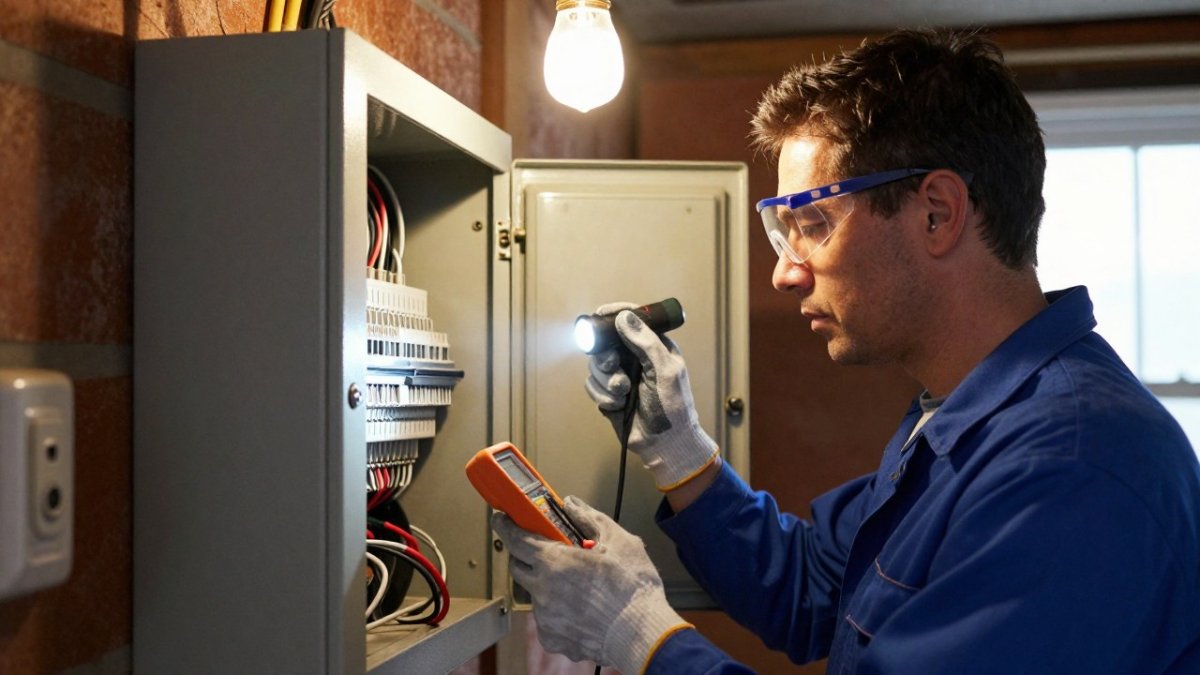
When to schedule one, a decision guide based on what you know
- Home age alone: Schedule an inspection if the home is over 40 years old and has never had a documented electrical review, or if it is over 60 years old regardless of documentation. Wiring from the knob-and-tube era and the early aluminum-wiring years is the highest-priority category.
- Wiring type: If you know or suspect knob-and-tube, aluminum branch wiring, or a fuse box, schedule an inspection before any major appliance purchase or remodel. These systems warrant a professional assessment even without symptoms.
- Observed symptoms: A single warm outlet, a burning smell, repeated breaker trips, or buzzing at a device moves you from "schedule an inspection" to "stop using that circuit and call for urgent service." Multiple symptoms together are an emergency.
- Life events: A recent home purchase, a planned addition, a new heat pump or EV charger, or a switch from a gas to an electric range all justify an inspection because they change the load on the system.
What you can safely check yourself versus what needs an electrician
You can safely check outlet faceplates for cracks and discoloration, test GFCI and AFCI buttons, verify that smoke and carbon monoxide alarms work, inspect visible cords for fraying, and confirm that the panel door closes and breakers are labeled. You should not remove a panel cover, probe inside a wall, tighten connections, or open an outlet that feels warm.
What an inspection typically costs and what drives the price
Pricing depends on the size of the home, the condition of the system, and the scope of the review. For current prices or a quote, contact Hriczak Electrical Contracting LLC directly. Ask for the scope in writing before booking so you know exactly what the fee covers.
If you are preparing for a review, our local electrical code compliance inspection guide explains what inspectors look for.
Prioritizing Upgrades When a Full Rewire Is Not Feasible
A full rewire is the definitive fix, but it is rarely the first step a homeowner can take. The practical approach is to rank upgrades by the ignition and shock risk they remove, then spread the rest across a few years. The order below reflects how most practitioners sequence work when budget is tight.
| Priority | Upgrade | Why It Comes First |
|---|---|---|
| 1 | Fix loose connections and damaged insulation at accessible points | Removes the most likely ignition points at the lowest cost |
| 2 | Install GFCI protection at kitchens, baths, laundry, and exterior outlets | Cuts shock risk fast and is required in those locations |
| 3 | Install AFCI protection on bedroom and living-area circuits | Addresses arc faults that GFCI devices do not detect |
| 4 | Replace an outdated panel or fuse box | Restores a working safety limit and creates room for dedicated circuits |
| 5 | Add dedicated circuits for heavy loads | Stops overloaded circuits at the source |
| 6 | Full rewire of remaining old wiring | Completes the job over time |
Match the first move to your wiring type and symptoms
- Knob-and-tube: Treat any accessible knob-and-tube as priority 1. Do not bury it in new insulation or cover it with drywall; that traps heat and hides deterioration.
- Aluminum branch wiring: Replacing outlets with standard "copper-only" devices on aluminum wire makes the problem worse.
- Fuse box: Replacing the panel is priority 1 if anyone has installed oversized fuses or if the box shows scorching. Until then, keep the correct fuse sizes on hand and never upsize a fuse to stop it from blowing.
- Repeated breaker trips or a warm outlet: Stop using that circuit and treat it as an urgent repair, not a scheduled upgrade. The prioritization table assumes no active symptom; an active symptom jumps the queue.
Protection technologies are not interchangeable
- GFCI protects people from shock by detecting a ground fault and shutting off the circuit. It belongs at kitchens, bathrooms, laundry areas, garages, and exterior outlets.
- AFCI protects against arc faults, the small, hot sparks that loose connections and damaged insulation produce, and is especially relevant in bedrooms and living areas where old wiring runs behind walls.
- Grounding gives fault current a safe path back to the panel. Ungrounded two-prong outlets are a shock hazard and cannot be made safe by installing a three-prong outlet without a proper ground path.
- Surge protection at the panel or at point of use protects electronics from voltage spikes; it does not replace GFCI, AFCI, or grounding, and it does not fix old wiring.
What each stage typically costs
Actual costs depend on your panel, wiring type, and how much wall access the job requires. For a detailed breakdown, see our cost to replace old electrical wiring. For current pricing, contact Hriczak Electrical Contracting LLC for a quote.
A staged plan that does not pretend to be a fix
Temporary measures, removing a space heater from an overloaded circuit, replacing a frayed cord, or unplugging a device from a warm outlet, reduce risk today but do not repair the underlying wiring. Use them only to bridge the time until the prioritized work is done, and put the highest-risk item on the calendar first rather than the cheapest. For protection upgrades specifically, our team explains whether AFCI breakers are worth the installation cost.
Schedule Your Electrical Safety Inspection with Hriczak
Old wiring does not announce itself. It heats up quietly until something fails.
If your home is older and you are unsure about the wiring, do not wait for a warning sign. Hriczak Electrical Contracting LLC has over 18 years of experience, licensed and certified electricians, and 24-hour emergency service for urgent problems. We provide personalized recommendations tailored to your budget and needs.
Get started with Hriczak Electrical Contracting LLC and make your home's electrical system safe. Get a quote today.
Frequently Asked Questions
What is the most common cause of electrical fires in older homes?
Aging wiring and overloaded circuits are the leading culprits. Knob-and-tube wiring, aluminum branch circuits, and fuse boxes that were never sized for modern appliances all raise the risk. Loose connections at outlets and switches create arcing that ignites nearby materials. A licensed electrician can identify which of these hazards apply to your house.
What are the warning signs of faulty wiring I should watch for?
Watch for flickering lights, warm or discolored outlet covers, a burning smell near switches, and breakers that trip repeatedly. Buzzing sounds at outlets or a faint shock when touching an appliance also point to loose connections or damaged insulation. These warning signs of faulty wiring mean you should stop using the circuit and call a licensed electrician. Do not open the panel yourself; energized components inside can cause electrocution even with the main breaker off.
How often should an older home's wiring be inspected?
Consider an electrical inspection if the house is over 40 years old, has knob-and-tube or aluminum wiring, or you are buying the property. Any flickering lights, burning smell, or tripping breaker warrants an immediate inspection rather than waiting for the calendar.
Can I just fix the dangerous parts instead of rewiring the whole house?
Often, yes. A licensed electrician can replace damaged receptacles, install GFCI and AFCI protection, upgrade the panel, and repair specific circuits without a full rewire. The right scope depends on wiring type, home age, and what the inspection finds. Prioritize the panel, kitchen, bathrooms, and any circuit serving a space heater or window air conditioner first. Get a written quote before work starts so the scope and price are clear.