 Listicle
Are Your Home's Electrical Systems Safe? 5 Checks
Last Updated: November 1, 2026
Quick Summary
The 5 essential home electrical safety inspection checklist items are: check outlets and switches for damage, test GFCI and AFCI protective devices, inspect cords, plugs and power strips, look for signs of faulty wiring, and review the electrical panel and breakers from the outside. Run the visual checklist twice a year and test GFCIs monthly.
- Press the TEST button on each GFCI monthly; if nothing happens, the device has failed and no longer protects you.
- Never run cords under rugs or daisy-chain power strips into other power strips.
- A breaker that trips repeatedly with nothing plugged in points to wiring or the breaker itself, so call a licensed electrician.
- Schedule a professional inspection every 10 years for a newer home and every 5 years for a home over 40 years old.
- Never remove the panel cover, because the main service lugs stay energized even with the main breaker off.
Table of Contents
- Why a Home Electrical Inspection Checklist Matters
- 1. Check Outlets and Switches for Damage
- 2. Test GFCI Outlets and Protective Devices
- 3. Inspect Cords, Plugs, and Power Strips
- 4. Look for Signs of Faulty Wiring
- 5. Review the Electrical Panel and Breakers
- How Often Should You Do a Home Electrical Inspection Checklist?
- When to Stop DIY Checks and Call a Licensed Electrician
- Frequently Asked Questions
Why a Home Electrical Inspection Checklist Matters
Most homeowners miss those signals because they don't know what to look for.
One rule frames everything: look, don't touch. Visual checks and pressing a test button are safe. Opening a panel, pulling a receptacle, or probing wiring is not.
1. Check Outlets and Switches for Damage
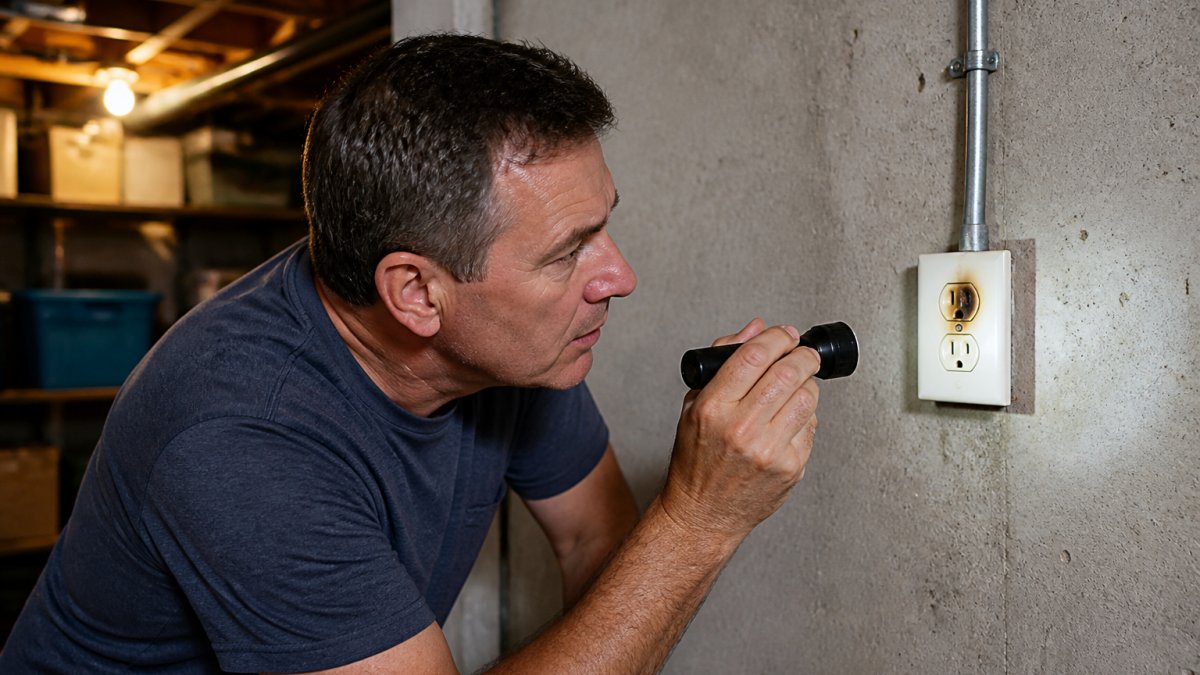
Outlets and switches give you the clearest early warnings in the house. A healthy outlet is cool, firmly mounted, and free of marks. Anything else deserves attention.
Work through this list room by room:
- Discoloration or scorch marks. Brown staining around the slots means heat has built up, usually from a loose connection or an overloaded circuit.
- Warm faceplates. An outlet that feels warm with nothing plugged in is a stop-work item. Turn off the breaker and call an electrician.
- Loose receptacles. If plugs slide out on their own or the outlet wiggles in the wall, the contacts or the box mounting have failed.
A common mistake is painting over outlets or covering them with furniture and forgetting they exist. If you spot warning signs and want to know whether the wiring behind them is outdated, how to identify outdated wiring in old homes walks through the confirmation steps.
2. Test GFCI Outlets and Protective Devices
GFCI outlets protect against shock by cutting power when they detect a ground fault, and they need monthly testing. Press the TEST button on each GFCI.
Where to test:
- Bathrooms and kitchens
- Laundry rooms
- Garages and unfinished basements
A GFCI that protects a downstream outlet is common: one device at the start of a circuit can protect several receptacles. When you press TEST, check the downstream outlets too, not just the one with the buttons.
Reading the result: reset, replace, or call
- Trips and resets normally. Working as intended. Log the test date.
- Won't trip at all. Failed device. Replace it. It is no longer providing shock protection.
- Trips immediately after reset, every time. Something on the circuit is leaking current to ground, or the device itself has failed. Unplug everything on that circuit and try once more. If it still trips with nothing plugged in, stop and call a licensed electrician.
GFCI receptacles have a finite service life. GFCI receptacles have a finite service life, so check the manufacturer's published lifespan for your device. A GFCI can still pass power while its sensing circuit is dead, which is why the test button matters more than whether the outlet works.
AFCI breakers and receptacles
AFCI protection targets arc faults, the small sparks that happen when wiring is damaged, connections loosen, or cords are crushed. They are required in many newer homes for bedrooms and living areas, and they show up as a breaker with a TEST button or as an AFCI receptacle. If your panel has AFCI breakers and you want to know whether adding them is worth it, AFCI breakers are worth the installation cost covers the trade-offs.
3. Inspect Cords, Plugs, and Power Strips
Extension cords and power strips cause a large share of home electrical fires, and the failures are visible. Pick up every cord in the house and check for fraying, cracked insulation, bent prongs, and missing ground pins on three-prong plugs.
Then apply these rules:
- Never run cords under rugs, through doorways, or under furniture legs.
- Never daisy-chain power strips into other power strips.
- Match the cord's rating to the load. A light-duty cord running a space heater is a fire waiting to happen.
- Replace, don't tape. A taped cord is a temporary fix that people leave in place for years.
Cords hidden behind appliances such as refrigerators or washing machines are easy to overlook, so pull appliances out once a year and look.
4. Look for Signs of Faulty Wiring
Faulty wiring rarely fails silently. It leaves clues: a burning odor with no obvious source, outlets that crackle, lights that flicker when appliances cycle on, or breakers that trip without a clear cause. Any of these means stop and get professional eyes on the system.
Watch for these signs of faulty wiring in particular:
- Warm or discolored switch and outlet plates
- A faint burning smell near walls or the panel
- Buzzing sounds from outlets or fixtures
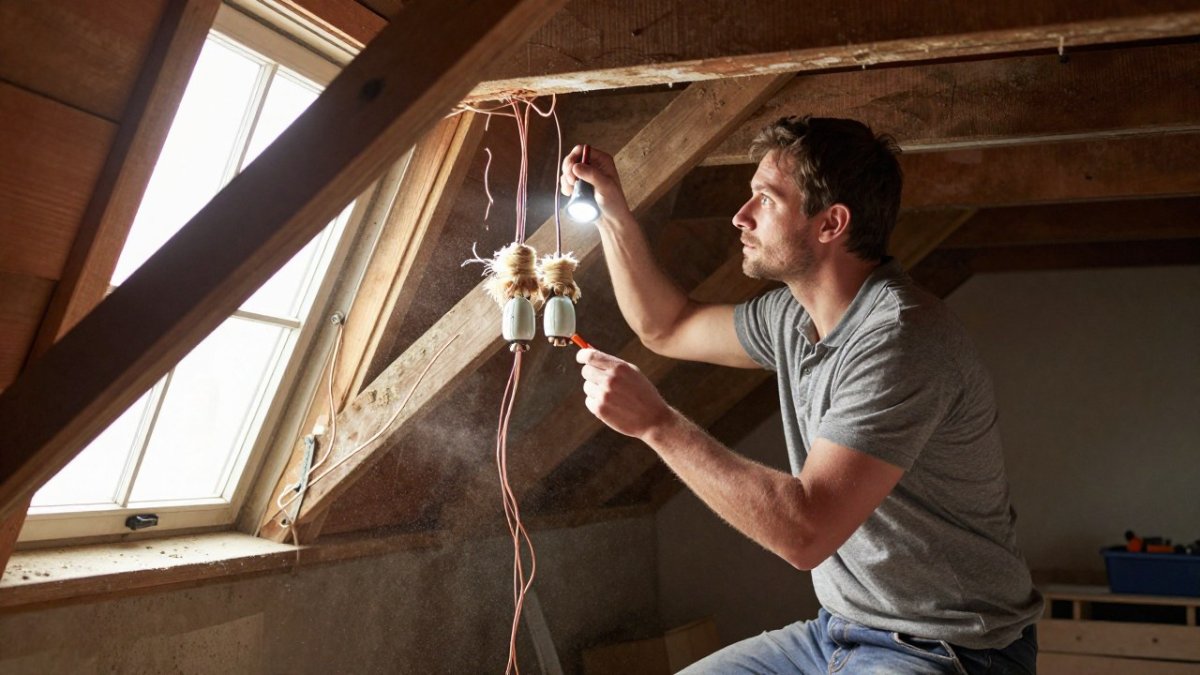
- Fabric insulation on old wiring visible in the attic or basement
Do not open walls or panels to investigate yourself. Photograph what you see, note where it is, and hand those notes to a licensed electrician.
5. Review the Electrical Panel and Breakers
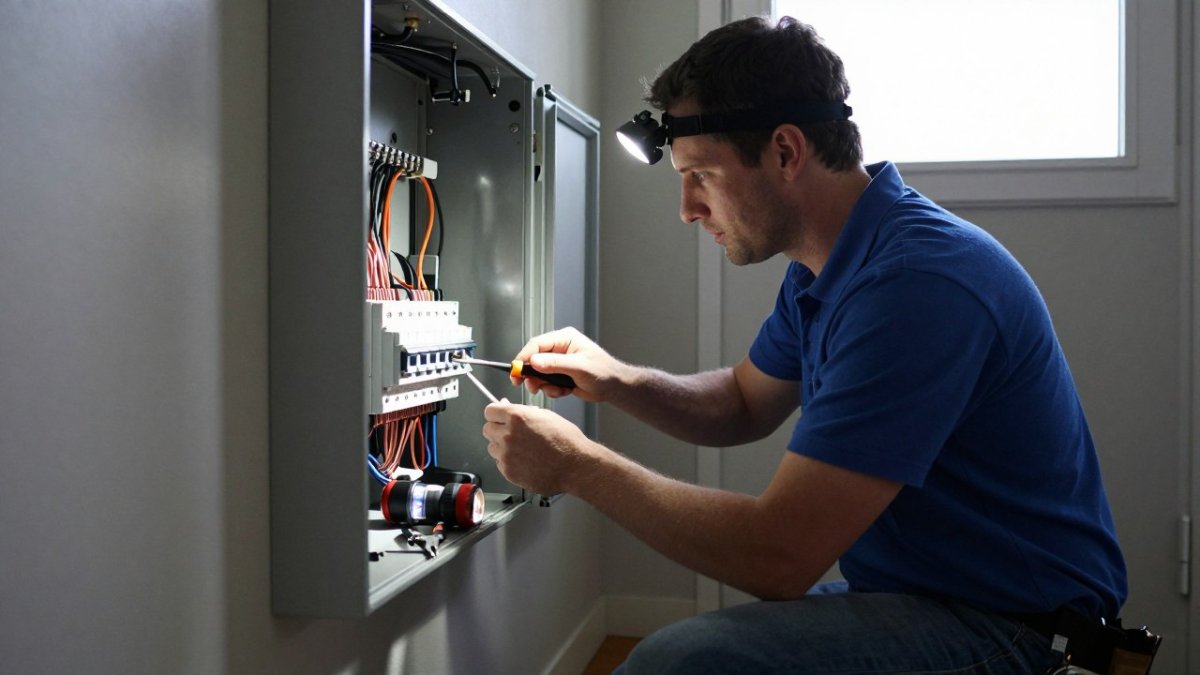
Your electrical panel is the one check you can do with your eyes only. Stand back, use a flashlight, and look. Do not remove the cover, and do not touch the breakers beyond flipping one back on after a trip.
- Is the panel labeled clearly, with amperage and circuit locations noted?
- Are there scorch marks, rust, or moisture inside the door?
- Do any breakers feel hot or smell like burning plastic?
- Are there double-tapped breakers, where two wires share one terminal?
A clear label is useful when a breaker trips at night. When a breaker trips at night, the label is what tells you which circuit to check and which outlets to unplug.
What a tripping breaker is telling you
A breaker that trips once and resets is usually doing its job: something drew too much current, or a fault occurred. A breaker that trips again and again is a message. Work through it in this order:
- Unplug everything on that circuit. If the breaker holds with nothing plugged in, the problem is likely an appliance or cord. Add items back one at a time.
- If it trips with nothing plugged in, the fault is in the wiring or the breaker itself. Stop and call a licensed electrician.
- If it trips only when a specific appliance runs, that appliance is the suspect. A space heater, microwave, or older refrigerator on a shared circuit is a common cause.
- If the breaker feels hot or smells like burning plastic, treat it as an active fault. Turn it off if you can do so safely and call.
A breaker that will not reset, or that resets but immediately trips, is not a nuisance. It is a fault indicator.
Fuse boxes vs. breaker panels
An old fuse box is not automatically unsafe, but it limits what the home can safely power. Fuses blow and must be replaced; breakers reset. The bigger issue is capacity: a 60-amp fuse box cannot support modern loads like central air, an EV charger, or a heat pump, and homeowners sometimes solve that by installing larger fuses than the wiring can carry. If that is what you have, alternatives to outdated fuse boxes for homes explains the replacement paths and what each involves.
Watch out for double-tapped breakers, where two wires share one terminal. It is common in older panels and it is a code violation in most cases because the terminal is not rated for two conductors. You can see it with the cover on only if the panel has a window or the labeling notes it; otherwise it is an electrician's finding, not a DIY one.
How Often Should You Do a Home Electrical Inspection Checklist?
Run the visual checklist twice a year, and test GFCIs monthly. Add a full professional inspection every 10 years for a newer home, every 5 years for a home over 40 years old, and before you buy any home.
Risk-based timing matters more than a fixed calendar. For a closer look at what inspectors check, see this local electrical code compliance guide.
| Situation | Visual Checklist | GFCI Test | Professional Inspection |
|---|---|---|---|
| Newer home, no issues | Twice a year | Monthly | Every 10 years |
| Home over 40 years old | Twice a year | Monthly | Every 5 years |
| Before buying a home | Once, during due diligence | Once | Before closing |
| Renovation or new EV charger | Before work starts | Monthly | Before and after work |
| Repeated trips or burning smell | Stop and call | Stop and call | Immediately |
When to Stop DIY Checks and Call a Licensed Electrician
Stop immediately if you see scorch marks, smell burning, feel heat at an outlet or panel, or hear buzzing.
The line is simple: you can look, test GFCIs, and replace a lamp. You cannot open panels, pull receptacles, splice wires, or work inside walls.
We hold a Philadelphia Master License (#061283) and a Bethlehem Master License (#M-213), and our team consists of licensed and certified electricians.
A checklist catches problems early, but it cannot confirm what is happening inside a panel or behind a wall. Get started with Hriczak Electrical Contracting LLC and get a quote for current pricing and availability.
Frequently Asked Questions
What are five essential electrical safety checks for a home?
The five core checks are: inspect outlets and switches for cracks, heat, or loose fit; test GFCI outlets using the test and reset buttons; examine cords, plugs, and power strips for fraying or overload; look for signs of faulty wiring such as burning odors or buzzing; and review the electrical panel for tripped breakers, rust, or missing labels. These five items catch the most common residential hazards and form the backbone of any home electrical inspection checklist.
How often should a home electrical system be inspected?
Professional electrical safety inspection frequency depends on the home's age, wiring type, and history of additions, so ask a licensed electrician what schedule fits your property. DIY visual checks of outlets, cords, and the panel can be done monthly. Any burning odor, buzzing sound, or sparking warrants an immediate call to a licensed electrician rather than waiting for the next scheduled inspection.
What are common signs of faulty wiring I should watch for?
Signs of faulty wiring include outlets that feel warm or look discolored, flickering lights when appliances turn on, a burning smell near switches, buzzing sounds from the panel, frequently tripped breakers, and mild shocks when touching appliances. Frayed or exposed wires visible in the attic or crawlspace are also red flags. If you notice any of these, stop using the affected circuit and have a licensed electrician evaluate it before restoring power.
Should homeowners inspect the electrical panel themselves?
Homeowners can safely look at the panel from the outside: check for rust, scorch marks, missing breaker labels, or breakers that trip repeatedly. Do not remove the panel cover or touch wiring inside, because the service entrance and main lugs remain energized even with the main breaker off. Panel work requires a licensed electrician. If you see rust, heat damage, or a burning smell near the panel, treat it as an emergency and call a professional immediately.
How do I test a GFCI outlet safely?
Plug a small lamp or nightlight into the GFCI, press the TEST button, and confirm the light turns off. Press RESET and verify the light comes back on. Repeat monthly and after any storm. If the outlet will not trip, will not reset, or trips repeatedly, the device has failed and should be replaced by a licensed electrician. GFCI outlet testing takes under a minute per device and is one of the highest-value checks in any electrical safety routine.