 blog
How to Compare Knob and Tube Wiring vs Modern Electrical Systems
Last Updated: November 14, 2026
Quick Summary
Knob and tube wiring runs separate hot and neutral conductors through ceramic knobs and tubes with no ground wire, while modern systems bundle hot, neutral, and ground conductors inside one sheathed cable. The biggest practical differences are the missing ground, aged cloth insulation, and heat that can't escape once cavities are insulated.
- Knob and tube was designed to dissipate heat into open air, so buried insulation traps heat.
- No national code requires removing knob and tube wiring simply because it exists.
- Two-prong outlets with no ground suggest original knob and tube circuits.
- Partial replacement targets compromised circuits; whole-house rewire replaces every knob-and-tube circuit.
- Access, panel condition, square footage, and remediation are the largest cost drivers.
Table of Contents
- Knob and Tube Wiring vs Modern Electrical Systems: Key Differences
- How Knob and Tube Wiring Works
- How Modern Electrical Systems Are Built
- Is Knob and Tube Wiring Safe?
- Knob and Tube Wiring Code Requirements
- Knob and Tube Wiring Replacement Cost: What Drives the Price
- How to Assess Your Home's Wiring and Plan the Next Step
- Frequently Asked Questions
Knob and Tube Wiring vs Modern Electrical Systems: Key Differences
Knob and tube wiring is an early electrical system that runs single copper conductors through ceramic knobs and tubes, with no ground wire and no cable sheath. Modern electrical systems bundle hot, neutral, and ground conductors inside a single sheathed cable. That one difference explains most of what follows.
Old Lehigh Valley homes often still have wiring that has never been touched. The system isn't automatically a death sentence, but it was built for a different era of electrical demand.
Below, we'll show you exactly how the two systems differ, where the real risks sit, and how to decide what your house actually needs.
| Criteria | Knob and Tube Wiring | Modern Electrical Systems |
|---|---|---|
| Ground wire | None | Yes, dedicated ground |
| Conductor layout | Separately run hot and neutral | Bundled in one cable |
| Insulation | Cloth, cambric, sometimes asbestos | Synthetic plastic insulation |
| Typical capacity | 15-20 amp circuits | 15-20 amp circuits, more per home |
| Clearance needs | Open air, keeps heat free | Enclosed in walls and boxes |
| Insurance and resale | Often flagged | Accepted as standard |
How Knob and Tube Wiring Works
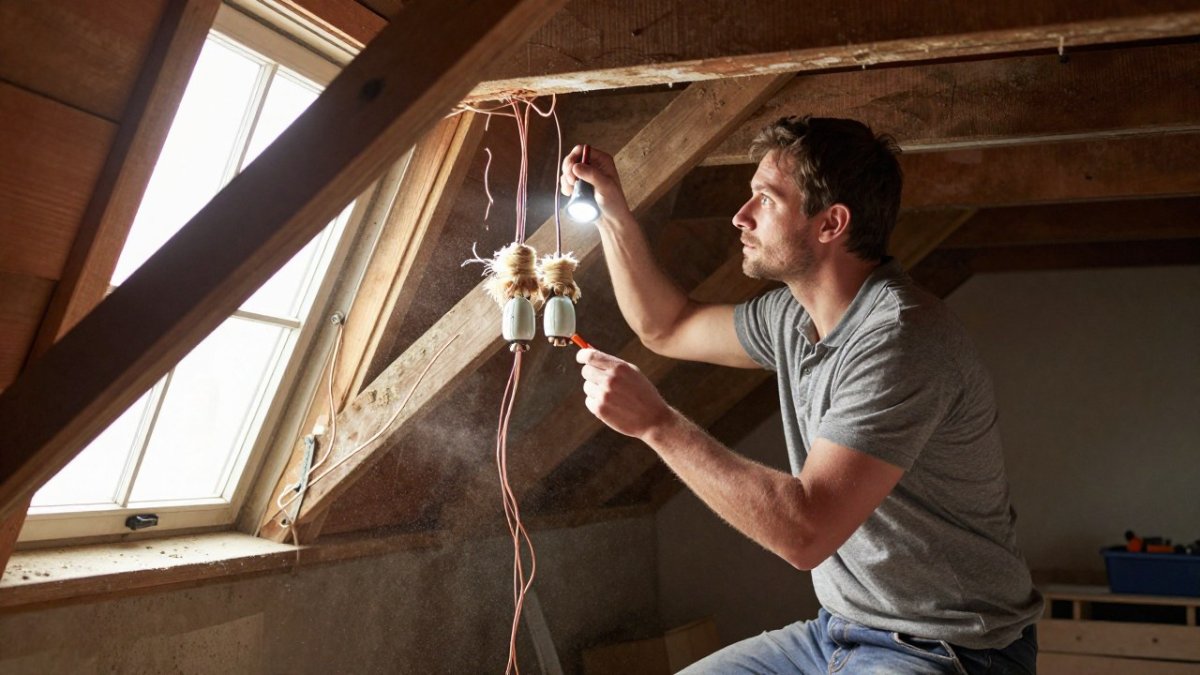
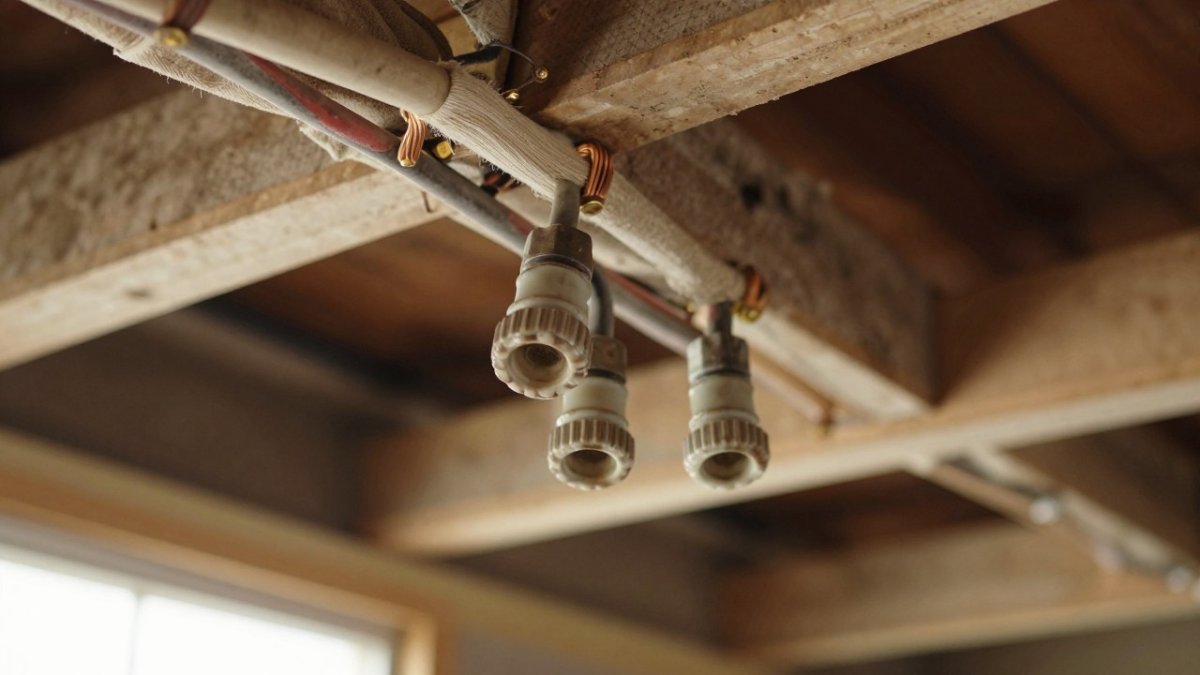
Picture a bare attic with two separate wires running along the joists, each one held off the wood by a white ceramic knob. That's the whole idea.
The system uses separate conductors: a hot wire and a neutral wire, run independently rather than wrapped together. Ceramic tubes protect the wire where it passes through framing. Ceramic knobs hold it away from surfaces so heat can escape into open air.
The insulation is the weak point. Cloth and cambric coverings dry out and crack with age. In some homes, asbestos was used. None of it was designed to last a century.
How Modern Electrical Systems Are Built
Modern wiring bundles everything into one cable, usually nonmetallic-sheathed cable like Romex. Hot, neutral, and ground conductors sit together inside a plastic jacket.
That construction solves three problems at once. The ground wire gives stray current a safe path back. The sheath protects conductors from physical damage. And the bundled layout means fewer splices hidden in walls.
Every connection lands inside a junction box, which keeps sparks and heat contained. Wire gauge is matched to the circuit breaker so an overloaded circuit trips before the wire overheats.
The trade-off? Modern cable runs inside walls, so damage stays hidden until something fails. Knob and tube at least lets you see it.
Is Knob and Tube Wiring Safe?
Knob and tube wiring is not automatically unsafe, but its risk profile is different from modern wiring, and the difference matters most when the system has been altered. The honest answer depends on condition and history, not age alone.
A useful way to think about it is to separate an intact, undisturbed installation from a compromised one. The two behave very differently.
What an intact installation looks like:
- Conductors remain separated on knobs and pass through framing inside ceramic tubes.
- The cloth or cambric insulation is pliable and continuous, with no bare copper visible.
- Splices, if any, sit inside accessible junction boxes.
- Circuits serve general lighting and small loads, not kitchen appliances or space heaters.
- The wiring is not buried under blown-in insulation or covered by finished surfaces that trap heat.
What a compromised installation looks like:
- Insulation is cracked, crumbling, or missing, exposing bare copper.
- Splices were made outside boxes, taped, and buried in walls or ceilings.
- Circuits were extended with modern cable tapped into knob-and-tube runs.
- The panel has been enlarged or breakered without matching the original wire gauge.
- The wiring is covered by thermal insulation, which traps heat the open-air design was meant to release.
That last point deserves emphasis. Knob and tube was designed to dissipate heat into open air. When attic or wall cavities are later filled with insulation, the conductors can no longer shed heat the way the original design intended.
Here is where the real problems concentrate:
- No ground wire. Two-prong outlets give no path for fault current, which raises electrical shock risk, particularly for appliances with metal cases and for anyone standing on a damp floor.
- Deteriorated insulation. Cracked cloth covering exposes bare copper, and the exposed conductor can contact wood, metal lath, or plumbing.
- Improper splices. Connections made outside junction boxes are a common pattern in older homes and a frequent source of arcing.
- Overloaded circuits. Modern appliances pull more current than the system was originally sized for, and a circuit that was fine in 1940 may not be fine today.
- Moisture and physical damage. Damp basements, roof leaks, and rodent activity all accelerate failure.
One point gets lost in the panic. A discussion among old-house owners on Reddit's Old Houses community makes the case that knob and tube was built to a solid standard and can serve general circuits when it is in good condition.
The wiring itself is not always the emergency; poorly made splices, buried junctions, and insulation contact are common sources of trouble. If you want to understand how aging wiring turns into a fire, read our breakdown of why electrical fire prevention matters in old homes.
Watch out: a home inspector's general report is not an electrical assessment. If the report flags knob and tube, the next step is a licensed electrician who can open boxes, check insulation condition, and trace circuits, not a decision made from the report alone.
Knob and Tube Wiring Code Requirements
No national code orders you to rip out knob and tube wiring simply because it exists. The National Electrical Code, published by the National Fire Protection Association, does not ban existing installations outright.
What actually trips people up:
- Local amendments. Many jurisdictions restrict new work on knob and tube circuits or require upgrades when a circuit is modified.
- Inspection triggers. Renovations, panel changes, and additions often force compliance with current rules.
- Insurance requirements. Carriers set their own standards, and those standards are stricter than code.
This is where general advice runs out. Requirements shift from one municipality to the next, so the answer for your address has to come from your address. Our guide to local electrical code compliance and inspections walks through how that process works.
Knob and Tube Wiring Replacement Cost: What Drives the Price
Replacement cost depends on scope. Pricing depends on the circuits involved, access, and panel condition, so visit our website for current pricing or to request a quote. What follows is how the scope gets set, so you can understand an estimate when you see one.
Partial versus whole-house scope. A partial replacement targets the circuits that are actually compromised: the kitchen, the bathroom, the laundry, or any run that has been spliced or buried. A whole-house rewire replaces every knob-and-tube circuit and usually brings the service panel and grounding up to current standards at the same time.
Four factors move the number most:
- Square footage and circuit count. More rooms and more circuits mean more cable, more boxes, and more labor hours. A small bungalow with a dozen circuits and a large colonial with thirty are different projects, not different prices for the same project.
- Access. Finished walls, plaster, and attic obstructions slow the work and add repair costs. Plaster and lath is slower to open and patch than drywall, and a finished basement ceiling can turn a straightforward run into a fishing exercise. Access is often the difference between a project that stays in the walls and one that requires opening surfaces.
- Panel condition. An undersized or obsolete panel usually needs replacing alongside the wiring, and a service upgrade may be required if the home's electrical load has grown. Panel work is priced separately from branch-circuit work in most estimates.
- Remediation. Old insulation, including asbestos-containing material, may need handling before work starts. In older homes, vermiculite or asbestos-wrapped conductors can be present, and testing or abatement adds a step before any wiring is touched.
A fifth factor is often overlooked: the condition of what is already there. If prior owners made additions, the electrician may find circuits that do not match the panel schedule, junction boxes buried behind drywall, or grounding that was added incorrectly. Those discoveries change scope mid-project, which is why a careful contractor walks the house before quoting rather than pricing from square footage alone.
A real figure comes from seeing your house. What you can do before anyone arrives is gather information: note which outlets are two-prong, photograph any ceramic knobs or cloth-covered wire you can see, and write down which appliances trip breakers. That information helps an electrician scope the work faster and helps you compare estimates on the same basis.
For more detail on current pricing, see our guide to the cost to replace old electrical wiring.
How to Assess Your Home's Wiring and Plan the Next Step
Start in the basement. Look at the panel, then trace what leaves it. If you see ceramic knobs in the joists or cloth-covered wires running alone, you've found knob and tube.
Then check three things:
- Outlets. Two-prong receptacles with no ground suggest original circuits.
- Splices. Any connection outside a box is a red flag worth photographing.
- Insulation condition. Crumbling or missing covering means the wire is exposed.
Don't open the panel or probe live wiring yourself. That's the line where you call a licensed electrician. Our licensed electricians have over 18 years of industry experience.
For a step-by-step method you can follow before anyone arrives, use our guide to identifying knob and tube wiring in your home. And if you're wondering whether your current system can handle a new appliance, our article on knob and tube wiring and modern appliances answers that directly.
The decision usually comes down to this: repair the dangerous sections if the rest of the system tests clean, and plan a full rewire if splices, damaged insulation, and overloaded circuits show up together. Hriczak Electrical Contracting LLC handles both, with licensed and certified electricians on staff, 24-hour emergency service, and a customer-focused approach that starts with a real assessment of your home rather than a sales pitch. Get a quote and find out exactly what your wiring needs.
Frequently Asked Questions
Is it okay to buy a house with knob and tube wiring?
It can be, but go in with eyes open. Knob and tube wiring is not automatically a dealbreaker if the visible runs are intact and no splices have been buried in insulation. Have a licensed electrician inspect the full system, including concealed runs, before you close. Insurers may require partial or full replacement before they will write a policy, so get an insurance quote early and factor remediation into your offer.
Is knob and tube wiring safe if it is in good condition?
Is knob and tube wiring safe in good condition? It can be serviceable for general lighting circuits, but it lacks a ground wire and was never designed for today's appliance loads. The bigger risks come from age: brittle insulation, buried splices, and insulation packed over the conductors that traps heat. An electrician can test insulation resistance and check for code violations to tell you whether your specific runs are still usable.
Can you run Romex off knob and tube wiring?
No. Connecting modern nonmetallic-sheathed cable to knob and tube wiring is a code violation and creates a grounding mismatch, because knob and tube has no equipment ground. It also confuses future inspections and can void insurance coverage. Any circuit that needs new cable should be run as a complete modern circuit back to the panel, not spliced into the old system.
How much does knob and tube wiring replacement cost?
Knob and tube wiring replacement cost depends on square footage, how many circuits are affected, whether walls need opening, and panel upgrades. A partial replacement of the most heavily loaded circuits costs far less than a whole-house rewire. Because every home is different, a licensed electrician should walk the property and provide a written quote rather than estimate over the phone.